
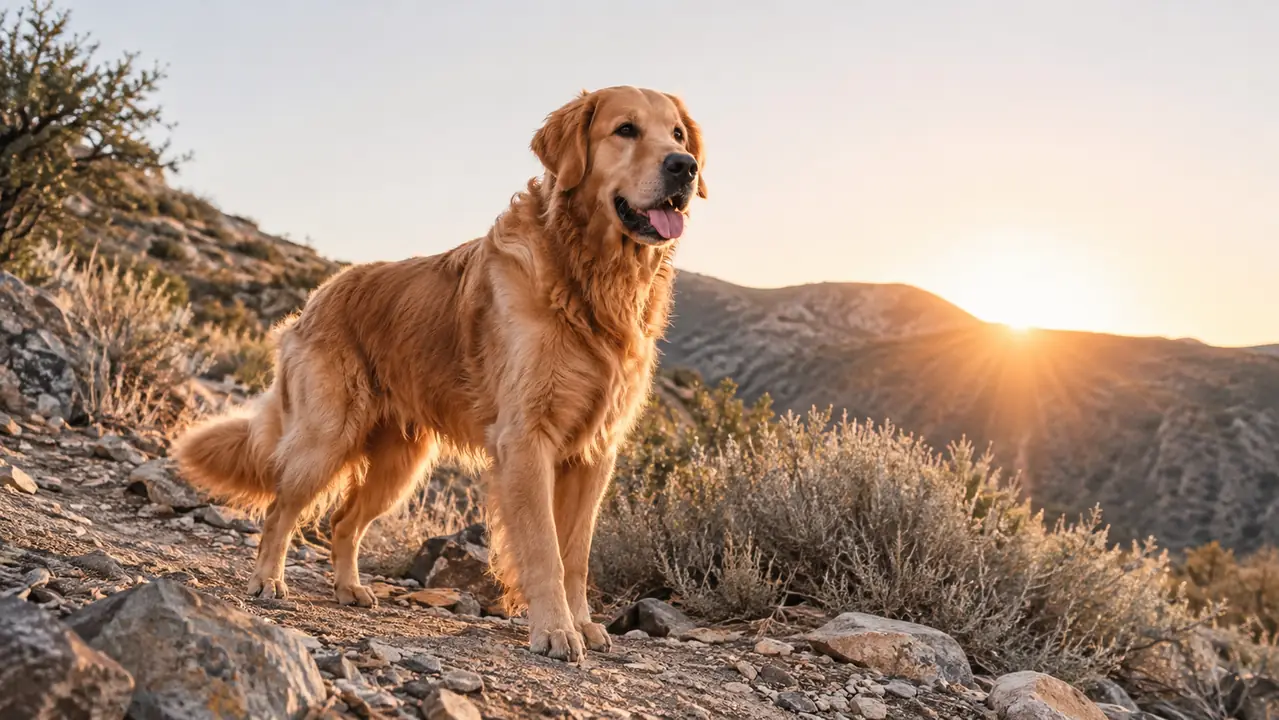
If you are shopping for paw protection and these two names keep showing up, here is the short answer. QUMY Dog Shoes are a four-pack of paw covers with a slip-proof rubber sole, hook and loop closure, and a faux leather, nylon and polyester upper. One set ships as four shoes in a single size, chosen by paw width, along with an instruction sheet. They are built for hot pavement, snow, and everyday trail grit. Ruffwear Grip Trex are a technical trail boot with a lugged rubber outsole and a gusseted cuff, built for long miles on rock and rough ground, and sold per pair. QUMY is the budget four-pack and the gap is visible in the construction, not just on the label. If your dog needs boots for summer asphalt, winter salt, and weekend trail walks, QUMY does the job. If you are running canicross miles on sharp granite several times a week, the Grip Trex earns its money.
I run agility and canicross with Juno, my four-year-old Border Collie, on the foothill trails outside Boise. She is about 40 pounds, very high drive, and will keep fetching until I make her stop, which is the whole reason I care about pacing, paw care and gear that fits a dog in motion. I first booted her two summers ago, on a stretch of new asphalt between the hatchback and the trailhead that was throwing heat back at my face. Since then she has worn QUMY on pavement, on frozen crust in January, and across a section of decomposed granite that was filing her pads down faster than they could grow back. I also borrowed a friend's Grip Trex set for a two-week trial on the same trails. This is what actually decided it: fit, retention, sole, and what wore out first.
| QUMY Dog Shoes | Ruffwear Grip Trex | |
|---|---|---|
| Price tier | Budget four-pack, replaceable without wincing | Premium single-pair pricing, an investment |
| Sole | Tough slip-proof rubber sole for traction on pavement and packed trail | Lugged technical outsole built to bite on rock and loose ground |
| Closure | Hook and loop straps, easy on and off | Hook and loop with a gusseted cuff that seals out grit |
| Sizing | Sold as a set of four in one size, measure paw width first | Per-pair sizing with a detailed fit chart |
| Upper material | Faux leather, nylon, polyester, silicone trim | Abrasion-resistant technical textile with reinforced seams |
| Retention at speed | Holds on walks and trots, can twist on hard direction changes | Stays put through extended running and turns |
| Hot pavement and winter salt | Does this well, that is what it was built for | Does this too, with more ground feel lost under a thicker sole |
| Care | Hand wash only | Machine washable on a gentle cycle |
| Replacing a lost boot | Buy another four-pack | Order a single replacement boot |
| Best for | Owners who need coverage now, on a budget, for seasonal conditions | Competitors logging serious weekly mileage on hard terrain |
Where QUMY Wins
The first win is the one that gets dismissed too fast: QUMY is affordable enough that you will actually use it. A lot of people buy premium boots, find them fiddly to wrangle onto four feet at 6:30 in the morning, and leave them in the car until the dog has outgrown them. QUMY is a four-pack at a price where a chewed strap or a boot lost in tall grass is an annoyance instead of a ruined purchase. That changes behavior, and behavior is most of the battle. I put them on Juno for a twenty-minute sidewalk loop in July because it costs me nothing to do it. Same in February, when the city salts the road and she lifts a foot every few steps at the corner. The set lives in the hatchback next to the leash, and when the ground is wrong for bare paws, they go on without a second thought about wear.
The second win is simplicity for seasonal use. The upper is faux leather, nylon, polyester and silicone trim over a slip-proof rubber sole, and the hook and loop straps mean on and off in a few seconds once your dog tolerates its feet being handled. The whole set weighs 7.04 ounces, so a 40-pound dog is not carrying a noticeable load. There is no fit system to learn, no cuff to fold, no per-foot chart to puzzle over. You measure paw width, you pick the size, you put four shoes on. For hot pavement in August and salt-crusted sidewalks in February, that is the entire job, and QUMY does it without asking anything else of you. It also ships as four shoes at once, so you are not doing per-pair arithmetic or buying two pairs to solve a two-pair problem.
The third win is that it is a low-stakes way to find out whether your dog will wear boots at all. Some dogs take to them in an afternoon. Some do a stiff-legged moonwalk for a week and then forget the whole thing. Juno did the moonwalk for about three days in the fenced backyard, over a couple of practice jumps, and then stopped noticing. I would rather discover that with a four-pack than with a pair of premium boots I had already committed to. If your dog refuses boots entirely, you have learned something genuinely useful and you are not out much for the lesson.
The four-pack I keep in the hatchback for summer pavement
Paw width is the one measurement QUMY is strict about. Measure with the dog standing, then check today's sizes and availability on Amazon.
Amazon Check QUMY sizing and today's price on Amazon →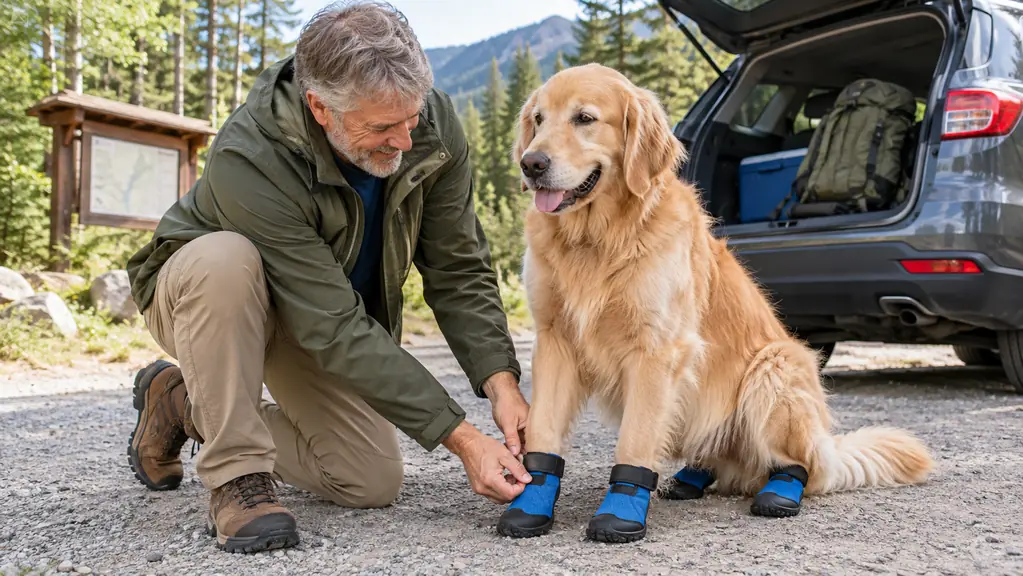
Where Ruffwear Grip Trex Wins
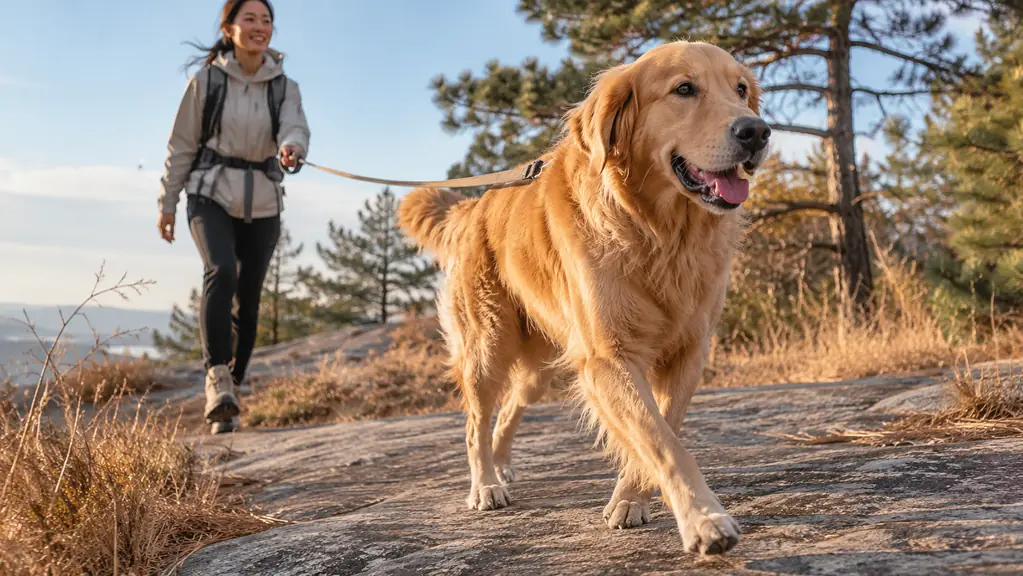
The Grip Trex sole is genuinely better on rock, and I am not going to pretend otherwise. The lugged outsole bites into decomposed granite and wet slab in a way a flat slip-proof sole does not. For a dog running off leash on foothill trails, that difference shows up as confidence. Juno was noticeably less hesitant crossing a smooth rock slab in the Grip Trex set than in the QUMY set, because she was not sliding. On loose downhill scree the gap was even more obvious. I noticed it in her shoulders before I noticed it in her feet. She braces differently when she trusts the ground, and on a steep descent she was bracing less and moving more freely, which is the whole point of protecting paws on a hard trail day.
Retention is the other honest loss. QUMY holds on a steady trot, but on a hard cut or a sudden stop the boots can twist, and one came off in shin-high grass while Juno was chasing a ball. I spent ten minutes crawling around looking for it and found it half a football field away. The Grip Trex has a gusseted cuff that seals grit out and holds the boot in place through extended running and direction changes, which is exactly what you want if booting is part of your weekly training rather than a seasonal errand. In two weeks of trail running I did not lose one, and I did not have to stop mid-run to re-fasten a strap. That matters more than it sounds like it does when you are on a leash and the dog is pulling.
One QUMY boot came off in shin-high grass and I spent ten minutes crawling around looking for it. The Grip Trex set never came off once in two weeks of running.
Fit, Sizing, and What Actually Goes Wrong
Most boot failures are fit failures, not product failures. QUMY is explicit about this in its own listing: measure the width of your dog's paws carefully, because width decides the size, and body weight is only a rough guide. The size 7 set measures 2.8 inches wide by 3.2 inches long. Get out a ruler, stand your dog on a sheet of paper, and mark the widest part of the front paw with the dog's weight on it, since paws spread under load. Measure the back feet too, because plenty of dogs sit a size apart front to back. I measured Juno at a hair over 2.6 inches across the front paw, went with size 7, and got a fit with a little room at the toe and enough strap to snug down without pinching.
Fit is not a one-time event either. Nails change the effective length, and a dog that has just had a trim sits differently in a boot than one that is three weeks overdue. I check the straps before every outing the way I check a harness buckle, and I re-check them at the trailhead after the first few minutes, because a boot that felt snug in the driveway can work loose once the dog is actually moving. Two quick tests settle it. If a strap leaves a red line across the top of the foot, it is too tight. If the boot spins freely when you twist it gently by hand, it is too loose, and that is the one that ends up in the grass.
The other thing that goes wrong is heat. Boots do not cool a dog down; they block the surface. On a 95-degree Boise afternoon, pavement can be hot enough to hurt long before your dog shows it, and a high-drive dog will not tell you. I test with the back of my hand for a full five seconds. If I cannot hold it there, we do not walk on it, boots or no boots. Boots are a barrier, not air conditioning, and they do nothing for a dog standing in direct sun on black asphalt. Build the tolerance slowly as well. Four short sessions in the yard beat one ambitious two-mile trailhead outing where the dog spends the second mile trying to kick them off.
Durability and Cost of Ownership Over a Season
QUMY's upper is faux leather, nylon, polyester and silicone with a rubber sole, sewn together as a unit. That is a sensible construction at the budget end, and mine held up through a summer of pavement walking and a winter of salt. What wears first is the strap and the seam where the upper meets the sole, especially on a dog that drags its back feet. On my set, the strap on the left hind was the first thing to look tired, somewhere around the ninth week of regular use, and the sole edge on that same boot started to separate by the end of February. Not a failure, just a clear hint about lifespan. QUMY is hand wash only and the listing states no warranty, which tells you what the maker expects. Plan on replacing the set once a season if you use it hard.
The Grip Trex is built to be repaired and replaced piece by piece, which is why people who run serious mileage keep buying them. Lose one boot on a trail and you order one boot. Lose one QUMY boot and you buy another four-pack. Over three or four seasons of heavy use, that math narrows the gap considerably, though the upfront difference is still large. There is a middle path too. Several people I run with keep a QUMY four-pack for pavement and street walks and a set of technical boots for real trail days, treating the cheap set as expendable. That is not a compromise. It is matching the tool to the surface, which is the same thing you do with your own shoes.
Care is part of the real cost. Hand washing four shoes takes about ten minutes with a soft brush and mild soap, and they need a full day to dry with the insoles out. Put them away damp and they smell like a wet kennel by the third week. Mud from a thawed February trail took two washes to come out of the nylon on mine. Machine washability on the Grip Trex is a legitimate convenience if you are booting several times a week, and it is the kind of small thing that decides how often the boots actually get used in a wet climate.
Who Should Buy Which
Buy QUMY if your dog needs paw coverage for hot pavement, winter salt, or occasional trail walks, you want a set of four at a price that makes replacing them painless, and your dog tolerates having its feet handled. It is the right call for a first pair of boots, for a dog that is still learning to wear them, and for anyone whose main problem is a hot sidewalk in July rather than a granite ridge above treeline. It is also the right call if your dog sits between sizes, since the four-pack lets you experiment without much regret.
Buy the Ruffwear Grip Trex if booting is part of your training plan rather than a seasonal errand. Canicross mileage, rocky trail running, a dog that cuts hard and turns, or a paw that needs protection on long days out. The lugged sole, gusseted cuff, machine washability, and single-boot replacement are worth it to someone who will use them fifty times a year. And if your dog is a puppy with open growth plates, skip both and keep the mileage short and the ground soft until your vet clears it.
Start with the four-pack, upgrade later if your mileage demands it
Paw width decides the size, so measure with the dog standing. Then order the QUMY set and give your dog a week in the yard before you plan a real outing.
Amazon Check QUMY Dog Shoes on Amazon →