
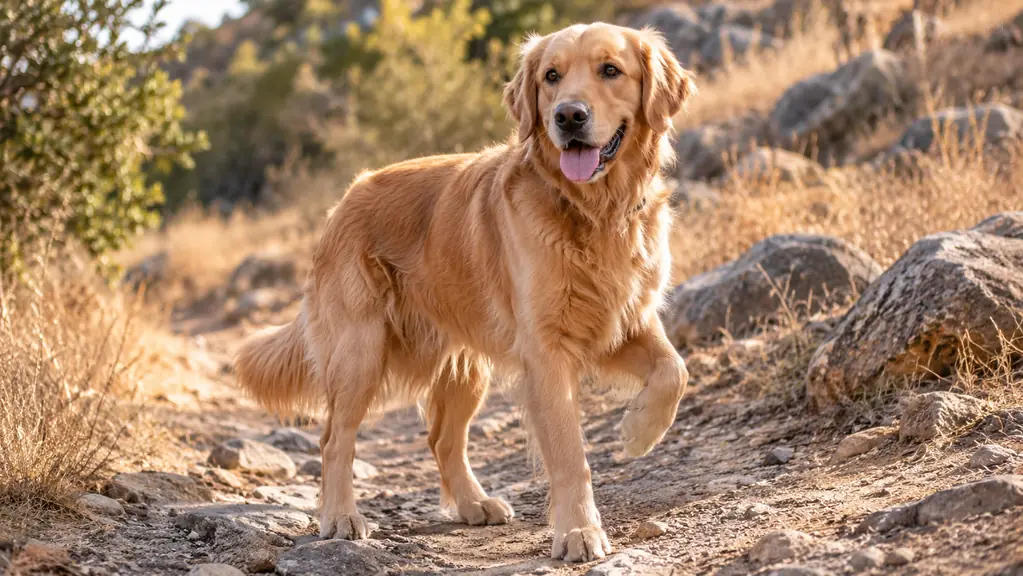
Juno hit the brakes about a mile up the trail, and for a second I thought she had seen a snake. She had not. She was standing on three legs, holding her right front paw off the ground, doing the small hop dogs do when the ground has turned against them.
That was late July, on a granite stretch that had been in direct sun since ten in the morning. I had checked the forecast, packed water for a forty pound dog, and started before the heat. I had not put anything on her feet.
We turned around. She limped for about fifty yards and then walked normally, and by the time we reached the hatchback she was bouncing again. That is the trap with a high drive dog. She will not tell you. She will just keep going until she cannot.
The next week I ordered QUMY dog shoes, mostly because the listing asked for paw width instead of weight. It was the first honest sizing instruction I had read in a while.
I am a physical therapy assistant, so I spend my days watching people compensate before a small problem turns into an injury. I know what a limp looks like in the first hour. Juno is a four year old Border Collie, forty pounds, and she will fetch until she drops.
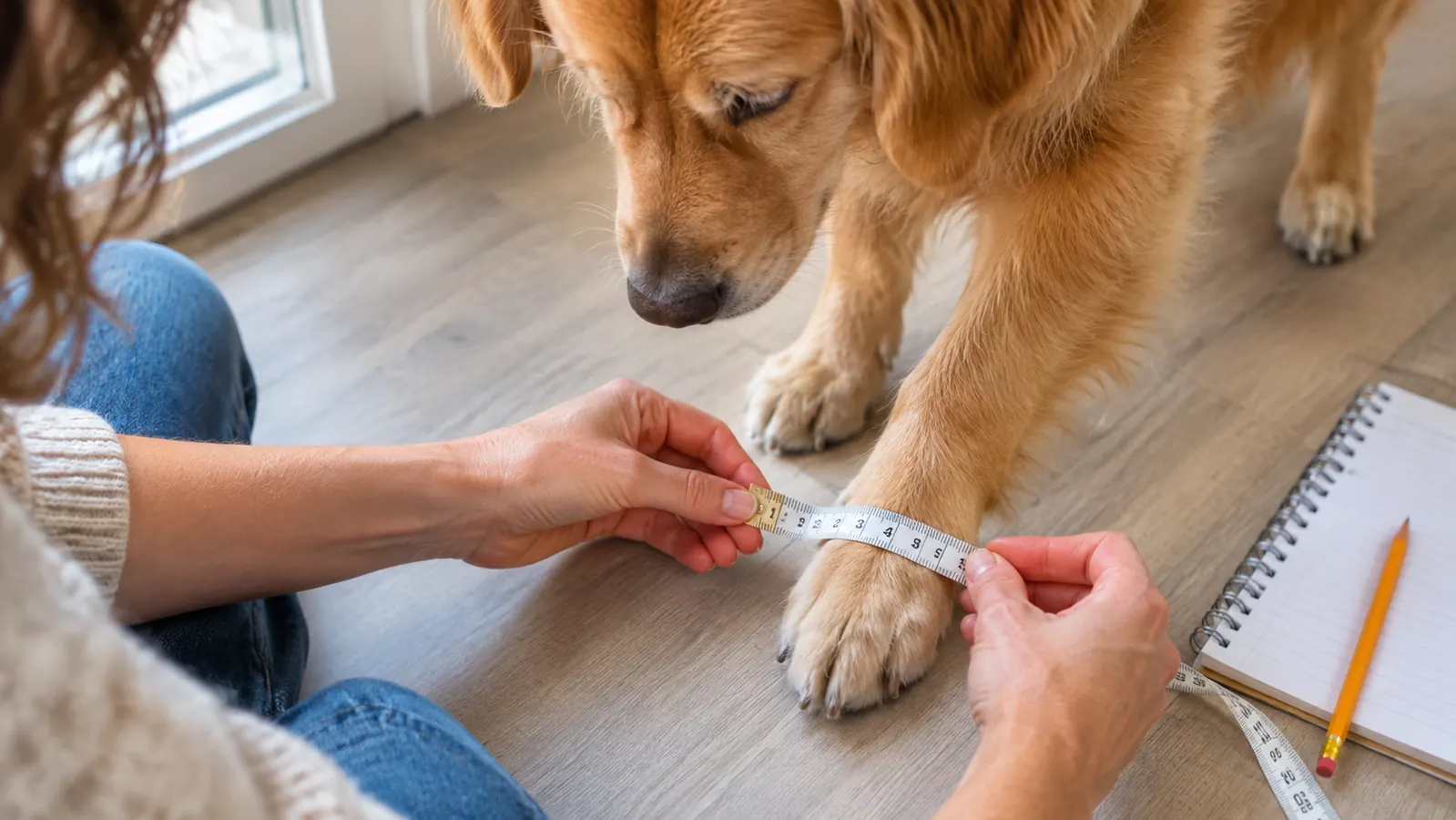
What arrived was a set of four shoes, one instruction manual, and a fit that took me two tries to get right. Her front paw measured 2.8 inches wide by 3.2 inches long, which is their size 7. The upper is faux leather, nylon and polyester over a rubber and silicone sole, closed with hook and loop. The whole set weighs 7.04 ounces.
Four shoes, 7.04 ounces for the set. The weight was never the problem. The fit was, and once the fit was right she stopped thinking about her feet.
The size chart asks for paw width. Measure before you order.
Size 7 fits a paw 2.8 inches wide by 3.2 inches long, with four shoes in the set. Measure both numbers on a standing dog, then check today's price.
Amazon Check Today's Price on Amazon →The first real test was a paved greenbelt path at two in the afternoon in August. I did the back of the hand test first, because boots do not cancel heat. They put one layer between the paw and the surface, and that is all they do. She walked the whole stretch without the hop, and she was still pulling at the end of it.
The second test was the foothills, the loose gravel and broken rock that chews pads by mid season. The sole was the part I expected to fail and it did not. What wore first was the loose end of the strap, which picked up burrs and needed trimming back.
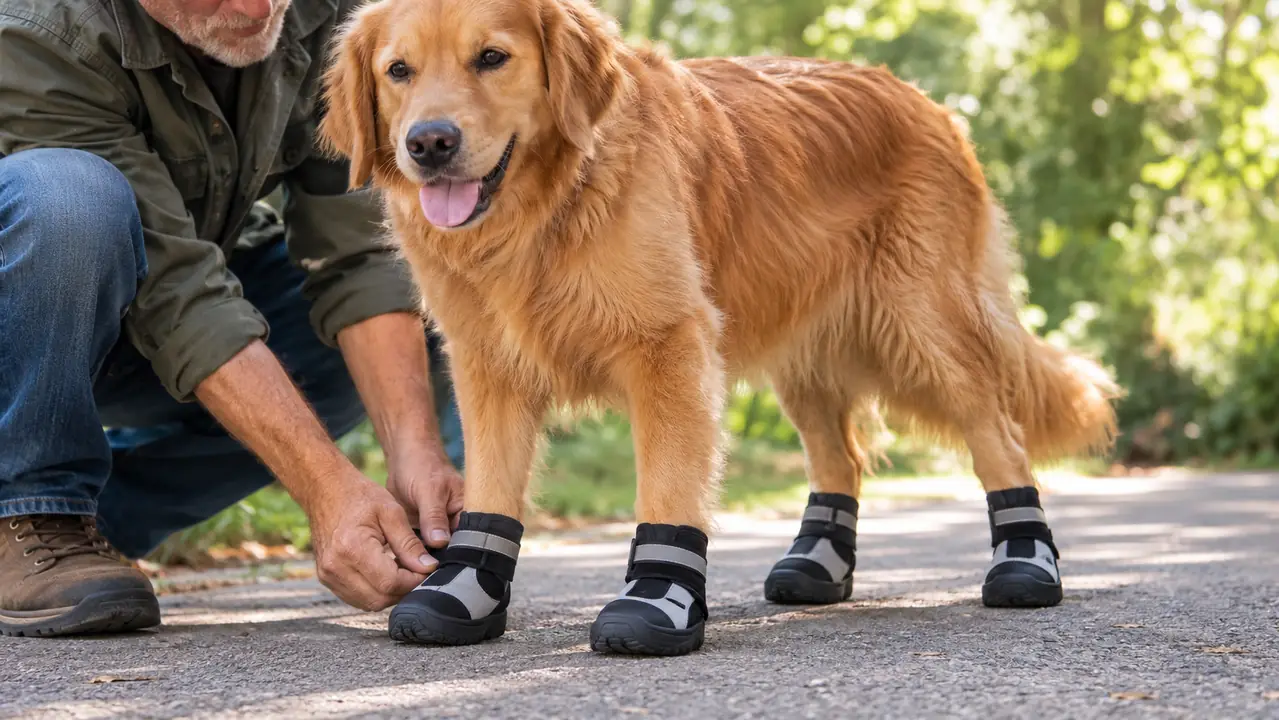
Fit is where these live or die. My first attempt was off, and she stepped out of them twice in the yard before we even left. Once I went by the tape measure instead of guessing from her weight, the QUMY set stayed on through a full session of recalls and tug. I check the straps every third or fourth walk now, because hook and loop loosens once grit gets into it.
Two honest limits. They are hand wash only, so they come inside muddy and stay muddy until I get to them. And the fabric panels are not built for a creek crossing, so on a wet day I take them off before the water and put them back on after.
The other limit is the dog. Juno tolerates gear. Plenty of dogs do not, and a dog who freezes in boots will not be fixed by a better boot. Put one on in the kitchen, feed a treat, take it off, repeat that for a week, and then try a short walk before you plan a hike around it.
What I'd Tell You If We Were Sitting at My Kitchen Table
I would tell you the boots are not the fix. The fix was hiking earlier, carrying more water, and being willing to turn around when the ground gets hot. The QUMY shoes solved one narrow problem, which was a dog who would not walk on hot pavement and hot rock, and they solved it well enough that a set lives in the hatchback now, next to the leash and a towel.
I would tell you the sizing is the whole ballgame. Measure the front paw while the dog is standing with weight on it, because a paw spread out on the floor measures differently than a paw bearing load. Width first, then length. A set that is close but not right will twist, and a twisting boot is worse than no boot because it rubs.
I would tell you the back of the hand rule, because it is the one thing that actually prevents a burn. Hold the back of your hand against the pavement for five seconds. If you cannot keep it there, your dog cannot either, boots or no boots.
I would tell you to look at the paws after every summer walk. Pads, between the toes, and the small splits that show up a day later when you have already stopped thinking about it.
And I would tell you not to optimize for the cheapest set. One that comes off a quarter mile from the car turns a good walk into a slow walk back over hot ground, so buy the size that matches your tape measure and check the straps before you leave.
Measure the paw, then order the size that matches the tape.
Size 7 is 2.8 inches wide by 3.2 inches long, four shoes to a set, hook and loop closure, hand wash only. Check the size chart and the current price before you commit.
Amazon See the QUMY Dog Shoes on Amazon →