
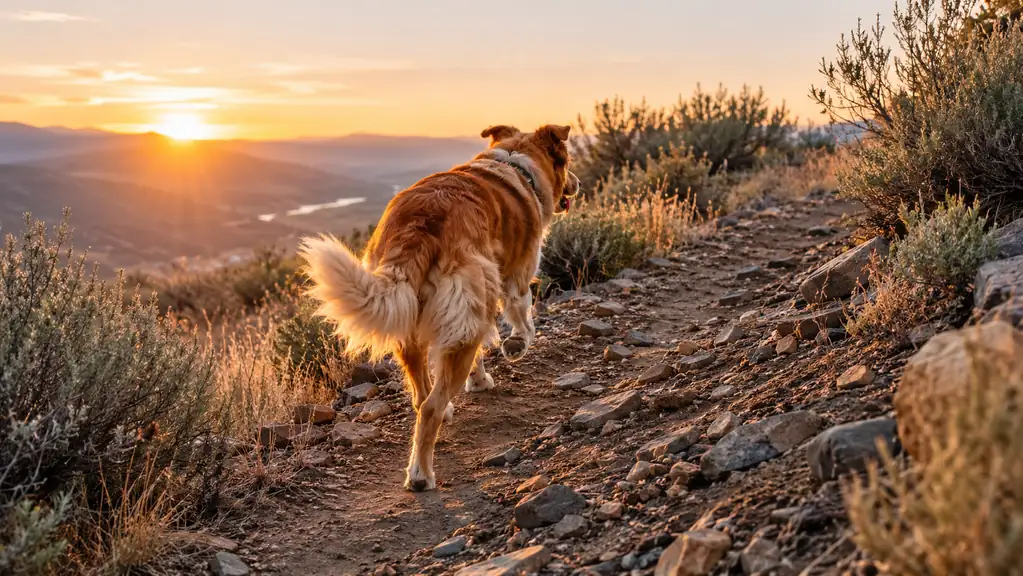
Juno is a 4-year-old Border Collie, about 40 pounds, and she will chase a ball until her legs quit. That is exactly the problem. High-drive dogs do not tell you their pads are burning. They tell you three days later, on the living room rug, licking a raw spot and holding a front foot off the floor while you cancel a canicross start you paid to enter.
I tried the cheap fixes first. Wax, boot liners, running earlier, picking smoother trails. Some of it helped. None of it covered the two hours between the trailhead and the kitchen. What finally stuck was a set of QUMY dog shoes, sized properly, kept by the back door, and put on before Juno ever touches hot asphalt or fresh goathead ground. Here are ten reasons I stopped treating paw protection as optional gear for a working dog, and what I learned about the QUMY set along the way.
Measure the paw, then stop guessing about hot pavement
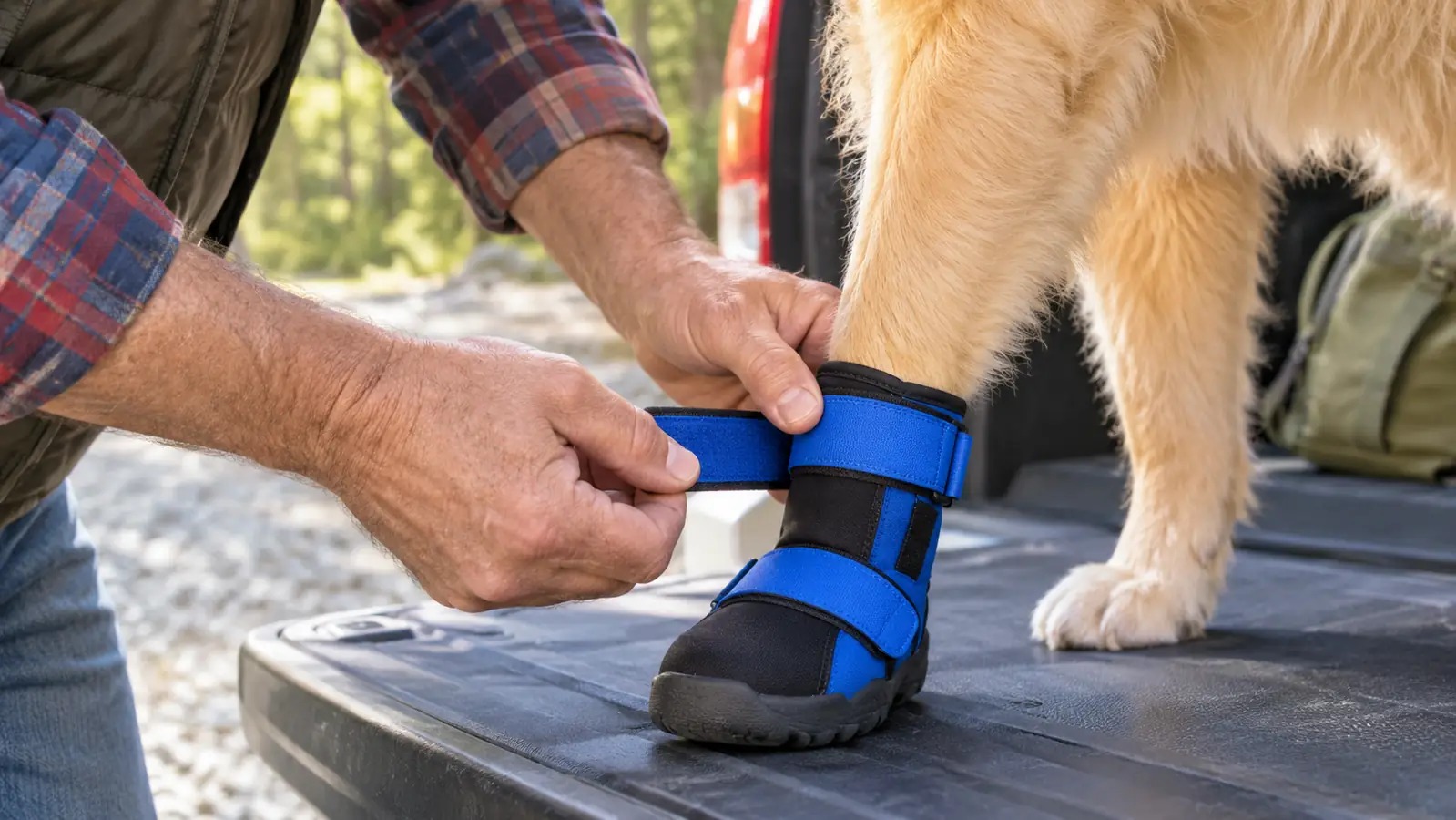
QUMY makes a four-shoe set with a slip-proof rubber sole and hook and loop straps that go on and off without a wrestling match. Check the current price and sizing on Amazon before your next trail day.
Amazon Check Today's Price on Amazon →Pavement heat hits the pad before it hits your hand
The five-second hand test is not reliable for a dog's paw. Asphalt pulls heat down into the pad and the pad has no way to shed it. Juno will keep running on a surface that is quietly cooking her, because the run is the reward and she is not going to stop for a foot. Boots put rubber and faux leather between the pad and the ground so the decision is not hers to make.
Foothill grit grinds between the pads like sandpaper
The trails outside Boise are loose shale, decomposed granite and dust. That grit works into the space between the toes and the main pad on every step, and by mile four it is abrading tissue that never gets a chance to toughen because we run it every weekend. A closed shoe keeps the grit on the outside of the foot instead of inside it.
Goatheads and cheat grass do not care how tough your dog is
Puncturevine is the great equalizer. I have pulled spines out of a pad with tweezers while a dog who deadlifts a tug toy screamed. Cheat grass works its way into the webbing between toes and has to be dug out. Neither is a toughness problem. It is a surface problem, and the fix is a barrier between the foot and the ground, not a dog that tries harder.
Snow balls up in the space between the toes
Winter running has the opposite problem. Snow packs into the gaps around the toes, freezes into a lump, and turns every stride into an uneven landing on a hard ball of ice. Around fifteen minutes in, the dog starts stopping to chew at a foot. The QUMY set is built for snow and winter use as well as hot pavement, and covering the foot keeps the packing from starting at all.
Sidewalk salt stays on the pad long after the walk ends
De-icer is the quiet one. The dog walks through it, then licks the pad clean an hour later in the car. Boots keep the salt off the foot, which means it never gets ingested and never sits against cracked skin. It is a small thing that turns into a large thing when your dog has a sensitive stomach and a long drive home.
One cut pad costs three weeks of training
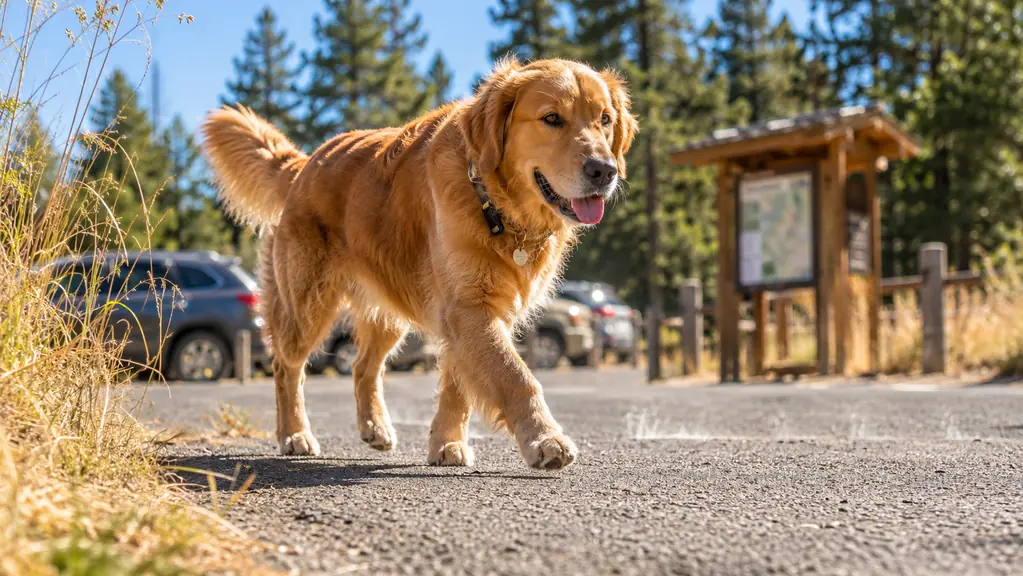
A sliced pad does not heal like a scrape on a leg. It flexes on every step, so it reopens. I lost most of a September to a single flint cut that I could have prevented with a sole instead of a bare foot. Three weeks of no agility, no canicross, no fetch. Against that, a set of shoes is the cheapest insurance in the gear bag.
Slick rock and club matting are where grip actually gets tested
The QUMY sole is a tough slip-proof rubber, and that matters more than people expect. Juno crosses wet rock slabs on the way to the good section of trail. She also turns hard on rubber matting at the agility club field. Both are surfaces where a scrambling dog loses a foot and tweaks something. Traction on the outsole is the difference between a confident turn and a slip.
The sole is what separates a boot from a sock
A lot of paw covers are fabric bags with a strap. They stop grit and do nothing about sharp rock. QUMY sews a rugged sole to faux leather, nylon and polyester upper materials, which is why the thing holds a shape under a 40 pound dog landing on it. If a product's protection ends at the fabric, it is not protecting against the thing that actually cuts pads.
Measurement and hook and loop are the whole fit game
The listing says it plainly: measure paw width carefully, because width is what picks the size, not body weight. That is correct and it is where most people go wrong. Juno is 40 pounds and her paws do not match the weight chart on any brand. Get the widest part of the standing paw in inches, match it to the size chart, then use the hook and loop straps to take up the rest. A boot that rotates is worse than no boot.
Easy on and off keeps a high-drive dog from rehearsing a fight
Juno is easy to put the QUMY set on and off, and that is worth more than any spec sheet suggests. A dog who gets to practice pulling her foot away every single time learns that paw handling is a contest. Two straps per shoe and out the door means we are not having that argument, and it means I actually use the boots instead of leaving them in the car.
What I'd Skip
Two honest notes. Winter snow boots can look appealing and then go soft on real rock. The QUMY upper is a mix of faux leather, nylon and polyester, and it is hand wash only, so plan on a bucket and a rag rather than the washing machine. I would also skip buying a set without measuring first, because a loose boot on a turning dog is a rolled foot waiting to happen. And I would skip running a young dog in boots on hot days at all. Warm pavement plus a puppy is a bad combination no matter what is on the paws.
A raw pad is not a training problem. It is a three-week hole in your season, and it heals on the dog's schedule, not yours.
Put a sole between your dog's pads and the ground
Four shoes, hook and loop straps, a slip-proof rubber sole, and a size chart that starts with paw width in inches. Measure once and keep the set by the door.
Amazon Check Today's Price on Amazon →