
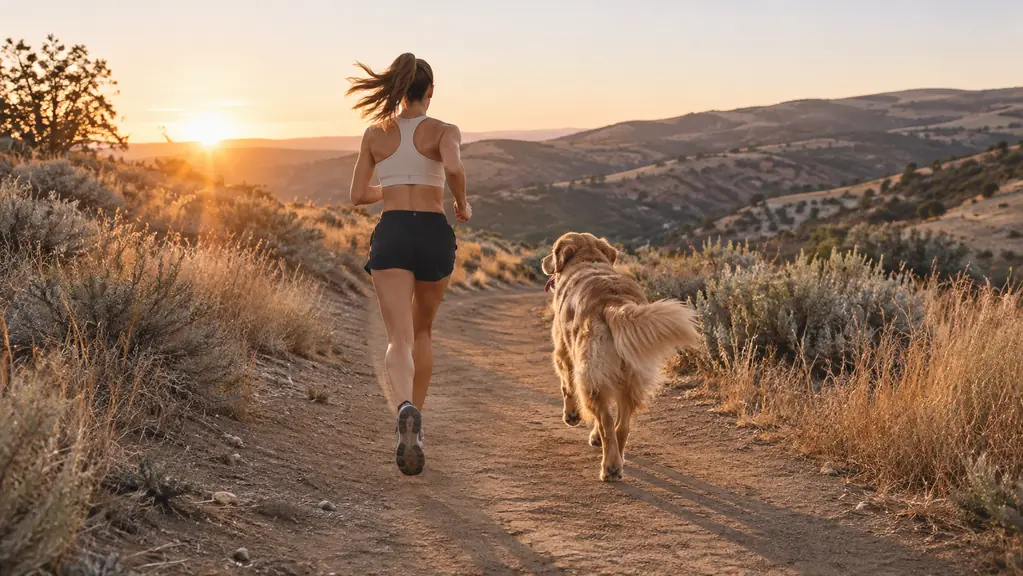
Juno is four years old, forty pounds, and convinced every morning is a race she is losing. For two years I ran with a standard six foot handheld leash looped twice around my wrist. For two years I finished every loop with a numb right hand and a shoulder that clicked when I lifted my coffee mug. I told myself it was a training problem. More impulse control work, better reward timing, more reps. Some of that was true. The part I got wrong was thinking gear could not be part of the fix. The swap that changed my mornings was the iYoShop hands-free leash with the zipper pouch, and the first run felt like setting down a bag I had been carrying without noticing.
I had reasons to wait. Hands-free leashes looked like a way to get dragged. I had watched a friend get pulled off balance by a dog that spotted a deer, and I did not want that to be me on a singletrack trail with a drop on one side. I also had a cheaper stretch waist leash in the closet that I used exactly twice. It bounced, the belt slid, and the clip felt thin in my hand. So the iYoShop sat in its bag for a week before I took it out. What made me try it was a conversation at the agility club field, where a woman with a much bigger dog said the two handles were the reason she still had a shoulder.
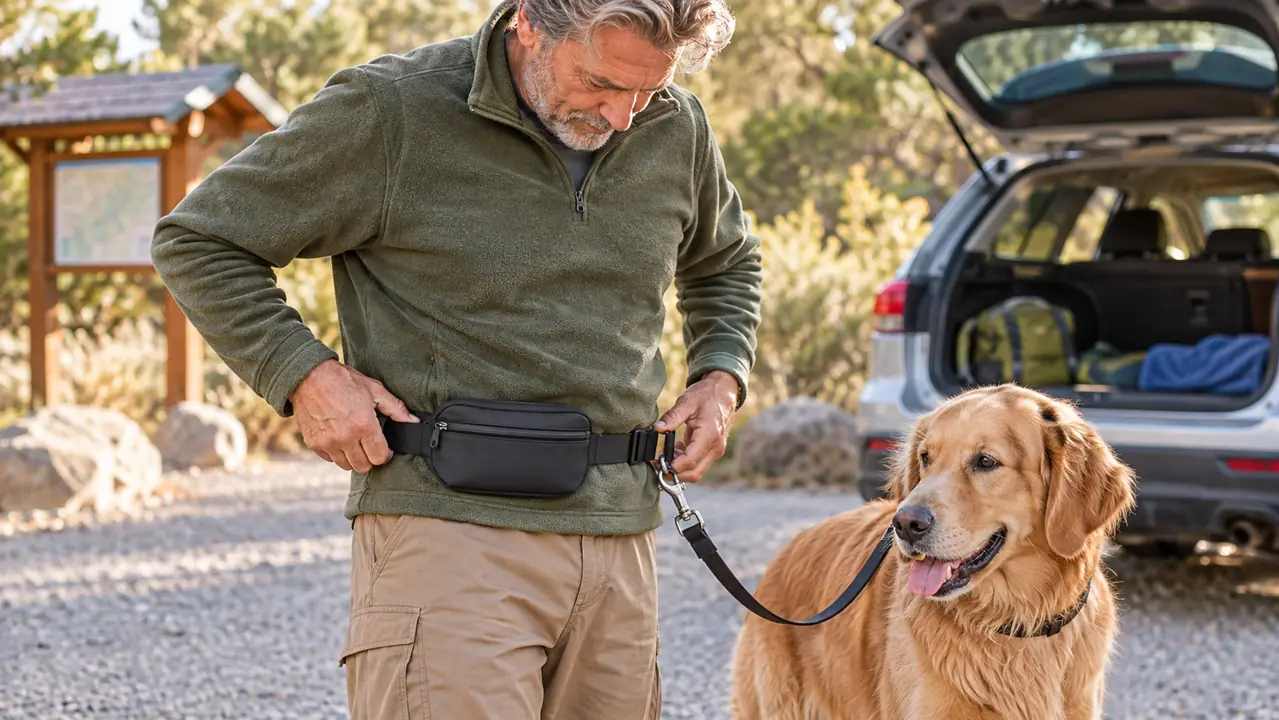
The first run was a short three mile loop on the gravel path behind the fairgrounds, flat and boring on purpose. I fitted the waist belt, which adjusts from 27 inches to 48 inches, and clipped the 2 inch heavy duty clip to Juno's harness. The leash itself is 68 inches long and the whole thing weighs 9.6 ounces, light enough that I forgot I had it on. What I noticed first was my arms. I could swing them. That sounds small until you have spent two years running with one arm pinned to your hip. My stride evened out and my breathing settled into a rhythm instead of the stop start yank of a handheld loop.
The second thing I noticed was the give. The leash has two shock absorbers built into it, and they do what the listing says, which is take a little edge off the moment Juno hits the end. It is not a substitute for a dog who has learned not to slam into the end of the leash. It is a cushion for the times she forgets. On a handheld leash that correction traveled straight into my wrist. Here it arrives softened, and I have a beat to say her marker word and reward the check in. Better timing on my part is the real win. The shock absorbers just buy me the half second.
The leash did not train my dog. It stopped fighting me while I trained her.
The two handles are the part I would not give up
A waist belt and a little stretch are easy to find. Two grab handles, a 2 inch clip and a D ring for a clicker are what make this one workable with a dog in motion.
Amazon Check Today's Price on Amazon →The two extra handles are the reason I still use the iYoShop on trail days. One sits close to the clip, so when we pass a horse or a mountain biker I can shorten the leash and keep Juno at my knee without wrapping anything around my hand. The other sits back near the waist belt, which is the one I grab when I need to stop her quickly and plant my feet. There is also a D ring on the clip end, and mine carries a spare clicker and a small bag holder. The zipper pouch on the belt holds my phone, keys and a few treats. I keep it light because a heavy pouch swings, and a swinging pouch is the fastest way to make a waist leash annoying.
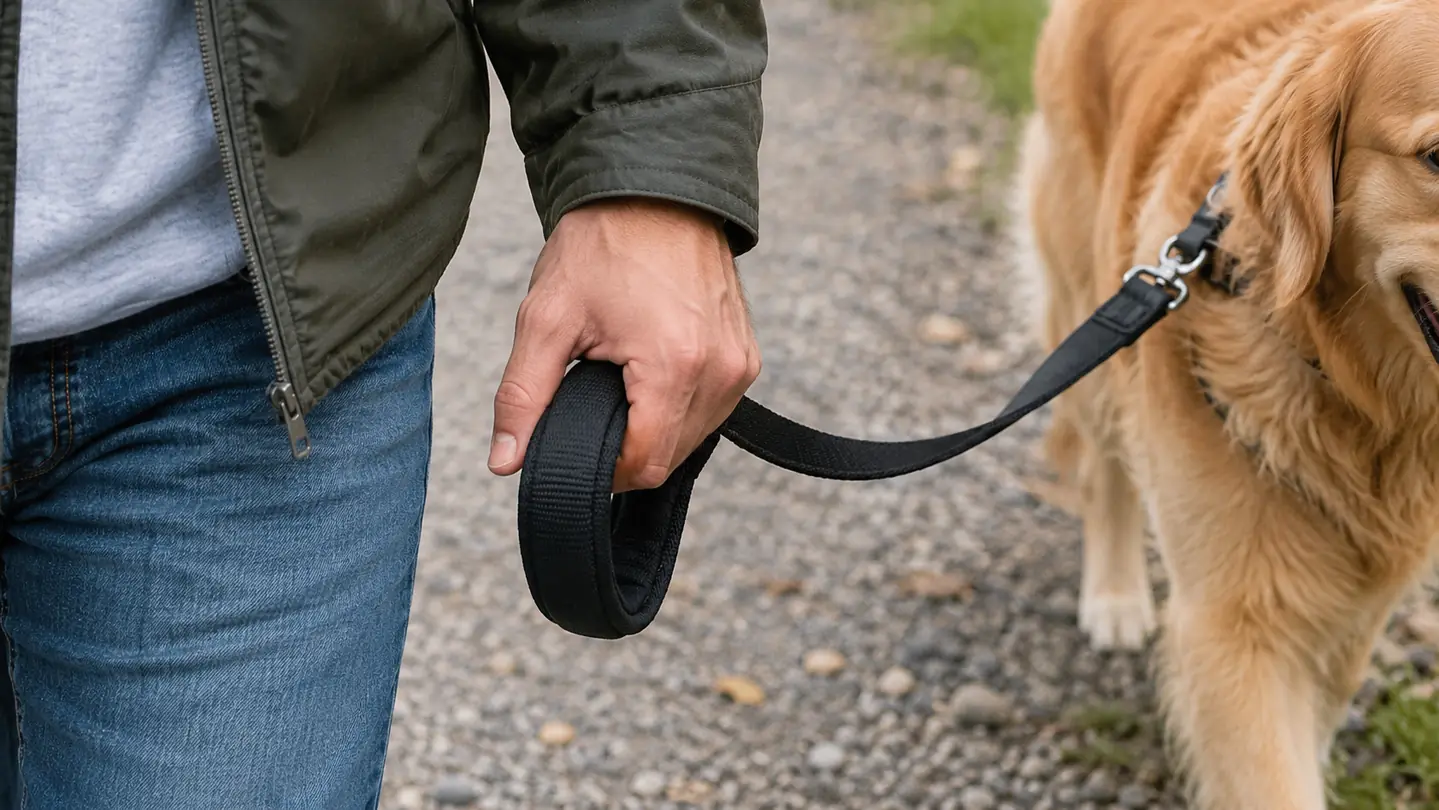
Fit matters more than anything else with a hands free leash, and this is where I would tell you to slow down. The belt is adjustable but it needs to sit low and snug, over the hip bones, not up around your waist like a running belt. The first time I wore it too high it rode up every time Juno pulled. Once I dropped it down and tightened it, the pull moved into my hips and my lower back instead of my shoulder. I also measured Juno's chest before I clipped anything on. A loose harness plus a long leash plus a dog who stops dead to sniff is how people get tangled.
Where it does not shine: tight technical trail with roots and side hills, where a longer leash and a fixed waist point can put you off balance. I still use a handheld on those sections, or I shorten up on the near handle and slow to a walk. I also do not run Juno in this setup on hot afternoons. The belt sits against your hips and the dog cannot tell you she is cooked. We go early, we carry water, and we check paws after. None of that is the leash's job. The leash only has to not get in the way of me doing those things.
What I'd Tell You If We Were Sitting at My Kitchen Table
I would tell you this is not a tool that fixes pulling. It is a tool that stops a pulling dog from wrecking your body while you do the training. I would tell you to check the fit of your harness first, because a waist leash is only as good as the harness it clips to. I would tell you the 1 year warranty is fine but not the reason to buy it. The reason is the two handles and the clip, which let you shorten and hold a dog in motion without wrapping a leash around your hand. And I would tell you the honest tradeoff: a hands free leash puts the pull into your hips, and if your hips or low back are already cranky, a waist belt is not a free upgrade. Test it on a short flat loop first, the way I did, and see how your body feels the next morning.
Start with one flat loop and see how your hips feel
Set the belt low and snug, clip to a well fitted harness, and keep the pouch light. The rest is training you were already doing.
Amazon Check Today's Price on Amazon →