
The problem with backyard agility is never the dog. It is the gear math. You buy a tunnel. Then you build a hurdle out of PVC that folds in half the first time a forty-pound Border Collie hits it at speed. Then you go looking for weave poles and find out they cost more than the tunnel did. By the time you have a sequence worth running, you have spent three weekends in the garage and your dog has decided the lawn is for napping. I did it that way first, so I recognize the pattern from the inside.
The JMMPOO Dog Agility Training Set takes the other approach. One box, sixty pieces, a storage bag, and enough equipment to build a real sequence on a small lawn the same afternoon it lands on your porch. I ran this kit with Juno, my four-year-old Border Collie, through a full spring and summer season out here outside Boise, and I have a clear picture of what it does well and exactly where it stops being useful.
The Quick Verdict
A genuinely useful starter kit for a high-drive dog and a small yard. The tunnel earns its place, the hurdle adjusts, and the whole thing weighs 8 pounds in the bag. The eight weave poles are a training aid, not competition equipment, and nothing in the box anchors itself on a windy day.
Amazon Check Today's Price →The kit that got my dog off the couch and onto a course
Sixty pieces, one bag, and a setup short enough that you will actually do it on a weeknight. See the full piece count and the current listing on Amazon.
Amazon Check Today's Price on Amazon →How I've Used It
Our yard is not large. It is a fenced rectangle behind the house with room for two practice jumps and a strip of grass that holds sun until about two in the afternoon. What I wanted from this kit was never a competition course. I wanted a way to practice handling in short bursts on the days when loading Juno into the hatchback and driving out to the club field was not going to happen. That is the honest use case, and it is where this set makes sense.
A typical session runs eight to twelve minutes, twice a day at most, and always before the heat comes over the ridge. Juno is high drive, the kind of dog who would fetch until she dropped, so the timer matters more than the equipment does. We work one obstacle, then chain two, then break with water and shade. The kit suits that rhythm because setup is short enough that I will actually bother on a Tuesday instead of saving it for the weekend.
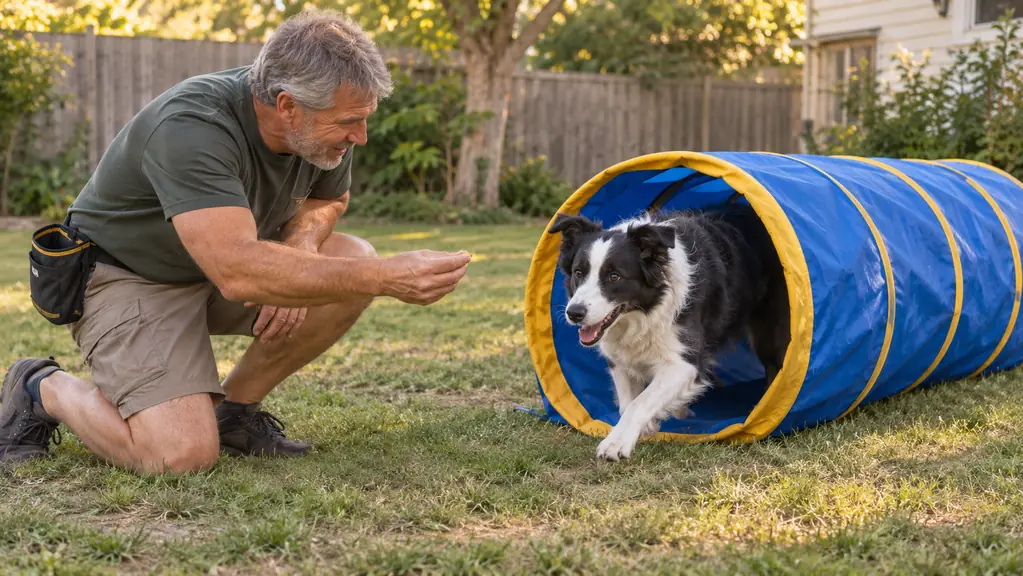
Here is what a Tuesday actually looked like in late May. I was out the door at 6:40 in the morning with the bag in one hand, because the valley hits the high eighties by noon and Juno does not pace herself in heat. Tunnel and two weave poles, nothing else. Twelve minutes, four repetitions through the tunnel with a front cross on the exit, then a break in the shade with water, then six minutes on the poles with a reward at the end of the line. That is the whole session. Nothing about it is glamorous, and it is exactly the shape of training this kit is built for.
Everything lives in the storage bag between sessions. The whole kit lists at 8 pounds, which is light enough to carry from the garage to the lawn in one hand while the leash is in the other. That number reads like a spec sheet detail. In practice it is the reason this equipment gets used instead of slowly migrating to the back of the garage next to the treadmill.
One safety note that has nothing to do with the kit and everything to do with how you use it. Grass in July gets hot enough to sting bare paws, and a dog with Juno's drive will not tell you her pads are burning. I set up in the morning, I check the surface with the back of my hand, and I stop the session before she does. Young dogs should not be doing repeated jumps at all until their growth plates close, so if you have a puppy, use the tunnel and the pause box and leave the hurdles folded.
What Comes in the Box
The listing counts a collapsible tunnel, eight weave poles, an adjustable hurdle, a jump ring, a square pause box, a whistle, two pet tennis balls, and the storage bag. The included components line goes further and lists eight 12-inch floor bars with outside caps and four 22-inch ones. That is more detail than most listings bother with, and it is the exact sort of thing you want in hand when you are checking the box against the page and counting parts on the driveway.
I laid everything out on the driveway the afternoon it arrived and counted against the listing, mostly because I have been shorted parts on outdoor gear before and I would rather find out on the concrete than mid-session. Eight 12-inch floor bars with outside caps, four 22-inch ones, the tunnel, the eight poles, the hurdle, the ring, the pause box, the whistle and both tennis balls. All of it was there. The listing also gives overall product dimensions of 57.09 by 27.56 by 36.22 inches, and I read the long number as the tunnel's working length, roughly four and three quarter feet. That is enough room for a dog to commit to the entry rather than skid halfway in and back out.
The tunnel is 190T tear-resistant polyester. That one sentence is doing a lot of quiet work. 190T is a light fabric, in the same family as a decent packable windbreaker, and the listing does not pretend otherwise. Claws will scuff it. The point of that material is to resist a full tear rather than survive a decade of club practice twice a week. For a backyard with one dog, that is the right trade, and I would rather have light and packable than heavy and permanent.
How the Pieces Held Up Over a Season
A full season of a forty-pound dog hitting that tunnel at speed, plus a lot of dragging and folding by me, left it scuffed and structurally fine. No seam failure, no rip creeping out from the mouth of it. It collapses back down flat enough for the bag, though on a humid morning it takes me a second attempt to get it folded neatly. That is a small annoyance and not a durability problem.
Wind is the piece I underestimated. On a bright afternoon in April a gust came over the fence and walked the pause box across the lawn while Juno stood over the spot where it had been, looking personally offended. Nothing broke and nothing bent. But that was the day I drove two tent stakes I already owned through the base loops and stopped fighting it. If your yard is open to the prevailing wind, budget for stakes on day one and save yourself the chase.
I also learned to set the tunnel across the wind instead of along it. A crosswind will roll a light tunnel sideways mid-run, and a dog who commits to an entry that shifts underneath her learns the wrong lesson about tunnels, which is a hard lesson to unwind later. Ten minutes of paying attention to which way the grass is bending fixed a problem I had been blaming on my dog.
The fabric and the plastic are the honest weak point of any kit that weighs this little. Eight pounds for sixty pieces means light materials, and light materials mean you handle them with some care rather than tossing them loose into a truck bed. Mine have lived in the garage, out of sun and rain, wiped down after wet mornings, and after a season of that they still look close to new. I would not leave this set outside through an Idaho winter and expect the same outcome.
Sixty pieces, 8 pounds in the bag, and a course I will actually set up on a Tuesday. That is the entire case for this kit.
The Hurdle and the Weave Poles Are Doing Different Jobs
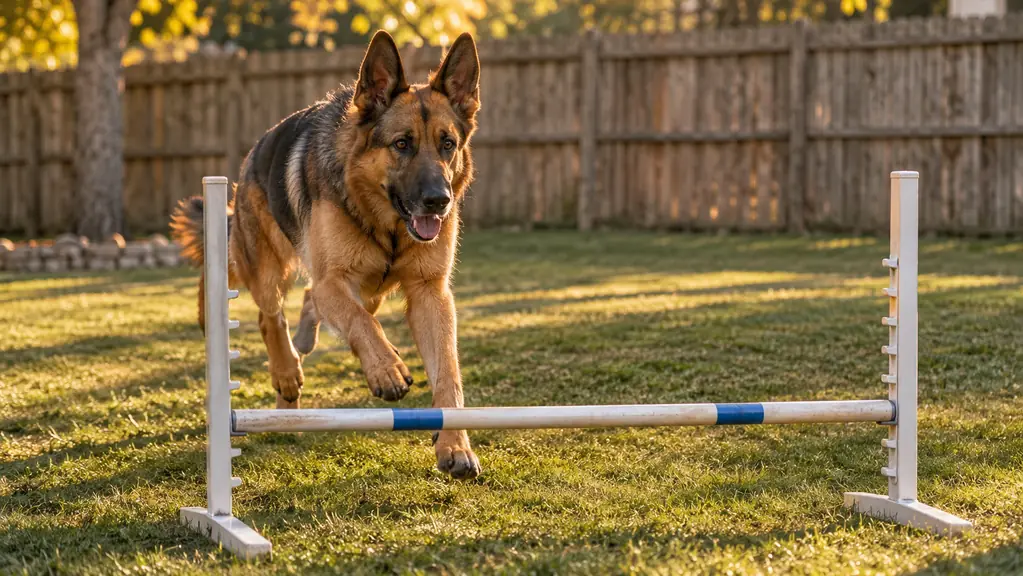
The hurdle is the piece I use most. The listing calls it adjustable, and finding the height where Juno has to think about her stride instead of blasting over it flat took a session or two of fiddling. Uprights set at a height where the dog has to collect rather than stretch is where the real handling work happens, and it is also where you protect a dog's joints from a season of careless repetition.
Height adjustment is the whole game on that piece. I started with the bar at the lowest setting, just to get Juno driving forward through the uprights without ducking her head, and stepped it up every few sessions until she had to shorten her stride to clear it cleanly. The week she started clipping the bar with a back foot told me the height had gotten ahead of her strength, so we dropped back down and stayed there for two weeks. That is a training decision an adjustable hurdle lets you make in real time. A fixed-height jump does not give you that option, and most homemade ones do not either.
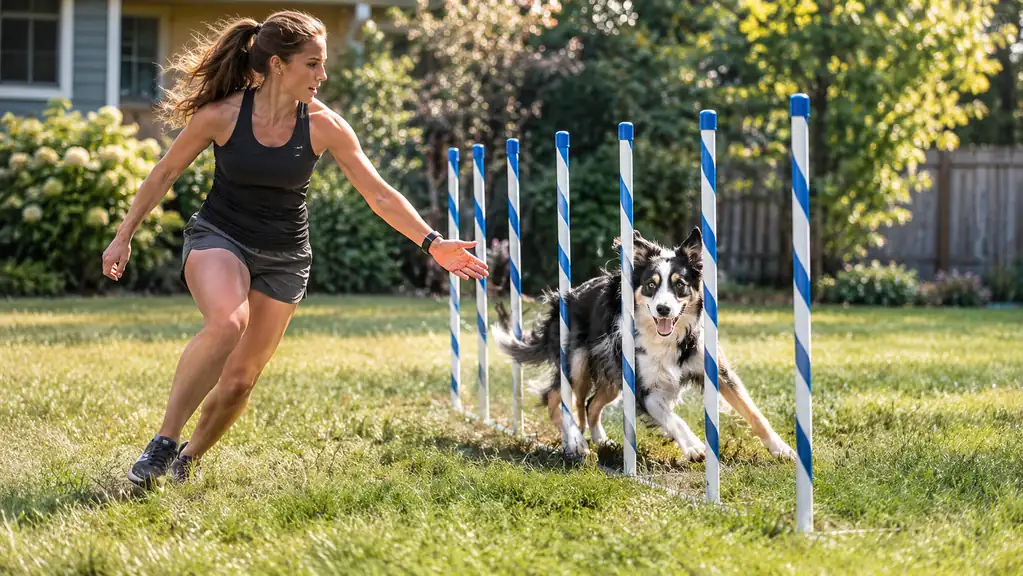
The eight weave poles are a different story, and I want to be straight about it. Eight is fewer than a full competition set, which matters if you are entering trials and need the real thing. What eight poles do well is teach the footwork and the rhythm to a dog who has never seen them, in a space small enough for a suburban yard. As a teaching tool, they work. As a replica of a trial course, they are not that, and JMMPOO never claims they are.
The jump ring and the square pause box are the two pieces most people skip past, and they are the two that taught Juno the most. A pause box asks for a stationary behavior in the middle of a moving course, which is a genuine skill for a dog who believes every session is a sprint to the finish. The ring gives you a different shape to send to, so the dog is reading the obstacle in front of her instead of memorizing the same line every time.
The Parts Nobody Mentions
There is a whistle in the box and I did not expect to touch it. It turns out to be useful between reps, when I want a recall from across the yard without shouting over wind and traffic. The two pet tennis balls are rewards, not obstacles, and mine live in the treat pouch rather than the storage bag so they stay clean and interesting.
Teardown takes about as long as setup, maybe two minutes if I am not being tidy about it. The bag holds everything, which matters more than it sounds. Loose weave poles and unbagged tunnel fabric in a garage is how equipment ends up bent, buried and forgotten. I have one bag, I know where it lives, and that is the difference between a kit that gets used four times a week and one that gets used twice and then becomes furniture.
What I Liked
- The tunnel is the standout. The 190T tear-resistant polyester held up to a full season of a high-drive dog hitting it at speed, with scuffing but no seam failure.
- 8 pounds for the entire kit, which makes setup short enough that weeknight training actually happens.
- Sixty pieces cover a complete sequence: tunnel, adjustable hurdle, eight weave poles, jump ring, square pause box, whistle, two pet tennis balls and a storage bag.
- Packs down into one bag fast, so it does not take over the garage or the back seat of the car.
Where It Falls Short
- Eight weave poles is short of a full competition set. Treat them as a teaching aid, not trial equipment.
- Nothing anchors itself. On windy days the lighter pieces slide and you will want your own stakes.
- Light materials reward careful handling. This is not club-grade gear and will not survive being thrown loose into a truck bed.
- The tunnel takes a second attempt to fold neatly on humid mornings.
Who This Is For
This kit fits the owner who has a dog with drive, a yard with some grass, and a real wish to give that dog a job without building a course from scratch. It suits a first agility dog, a rescue who needs an outlet, or a pet who gets the evening zoomies and needs a better answer than the sofa cushions. The listing recommends it for small, medium and large breeds, and at forty pounds Juno sits comfortably in the middle of that range.
It also suits the handler who is training alone, which is most of us on a weekday. Every piece here can be set up and run solo, and nothing requires a second person to hold a bar or reset a jump. If you are working through a handling book or a class handout by yourself in the backyard, this set covers the obstacles those drills assume you have.
Who Should Skip It
If you are competing at the upper levels and need a regulation weave set, this is not that purchase and you already know it. If your dog is a hard, heavy hitter who slams into equipment at full body weight, light fabric and plastic bases will not last the way club-grade gear lasts. You will end up replacing pieces, and the money you thought you saved goes out the door a second time.
And if your outdoor space is a postage stamp with no run-out, or if you are not going to commit to short sessions several times a week, the box will sit in the garage and quietly become clutter. That is not the kit's fault. Agility equipment does not train the dog. The reps do, and the reps only happen if setup is easy enough to be worth it. JMMPOO made setup easy. The rest is on you and your calendar.
Reps train the dog. The kit just has to be worth setting up.
Tunnel, adjustable hurdle, eight weave poles, jump ring, pause box, whistle and storage bag, all in an 8-pound kit you can carry in one hand. Check the current listing on Amazon.
Amazon Check Today's Price on Amazon →