
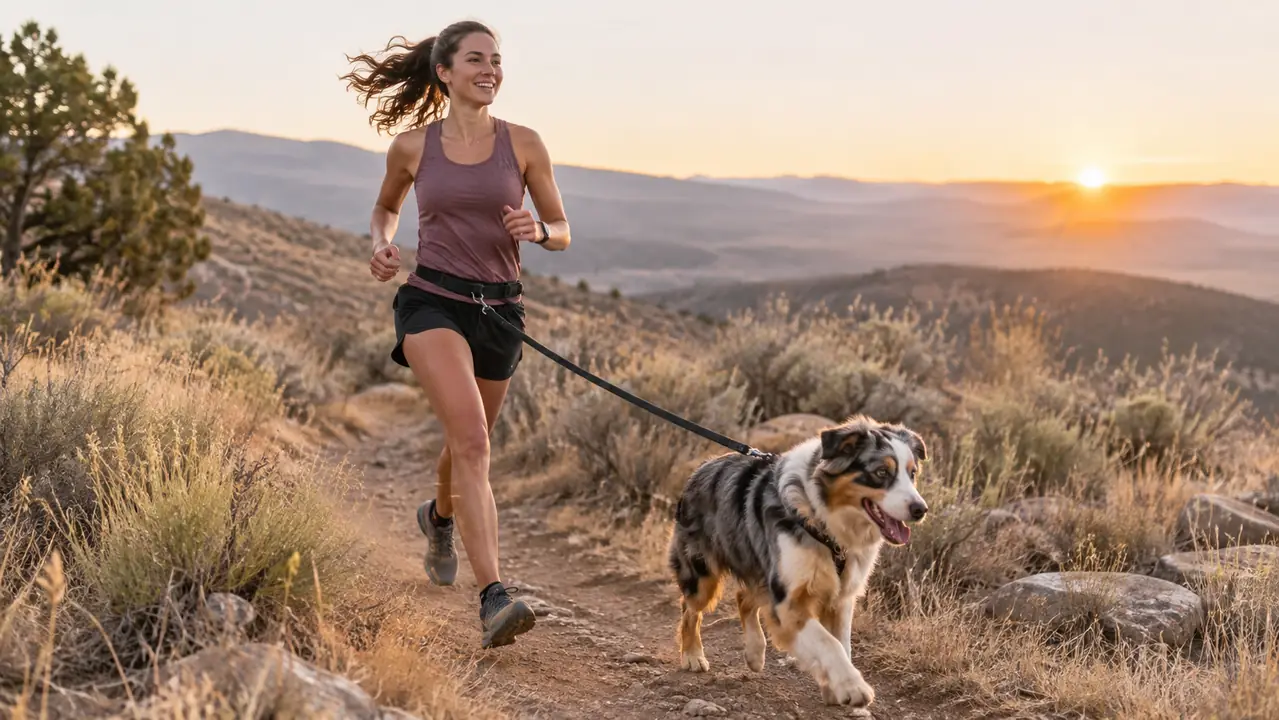
The first time I ran a canicross fun run with a handheld leash, my right shoulder was sore for three days and my left arm did nothing but counterbalance. Juno, my 4-year-old Border Collie, spent the whole 5k surging against a line that had no give in it. That was two seasons ago. This season I have run almost every foothill trail outside Boise with the iYoShop hands free leash around my hips instead of a loop of nylon in my fist.
I will not pretend a waist leash fixes a dog that pulls. It does not. What it does is move the load off a joint that was never built to absorb it, and give you back the hand you were using to hold a leash instead of a water bottle. Here are ten reasons, roughly in the order they mattered to me, why I stopped carrying a leash in my hand on runs.
The belt that gave my shoulder a season off
The iYoShop hands free leash fits a 27 to 48 inch waist, runs two shock absorbers in the line, and puts a two inch clip between Juno and my hips. It is the setup I run four days a week now.
Amazon See the iYoShop Leash on Amazon →Your shoulder stops doing the steering
I am a physical therapy assistant, so I notice shoulder mechanics for a living. A handheld leash locks one arm at your side at a fixed angle for the entire run while the other arm swings freely. Twenty minutes of that and my right trapezius is doing work it was never asked to do. With the iYoShop belt around my hips, both arms swing. Juno still hits the end of the line when she spots a ground squirrel, but the correction travels into my pelvis instead of up my neck.
Two shock absorbers turn a lunge into a nudge
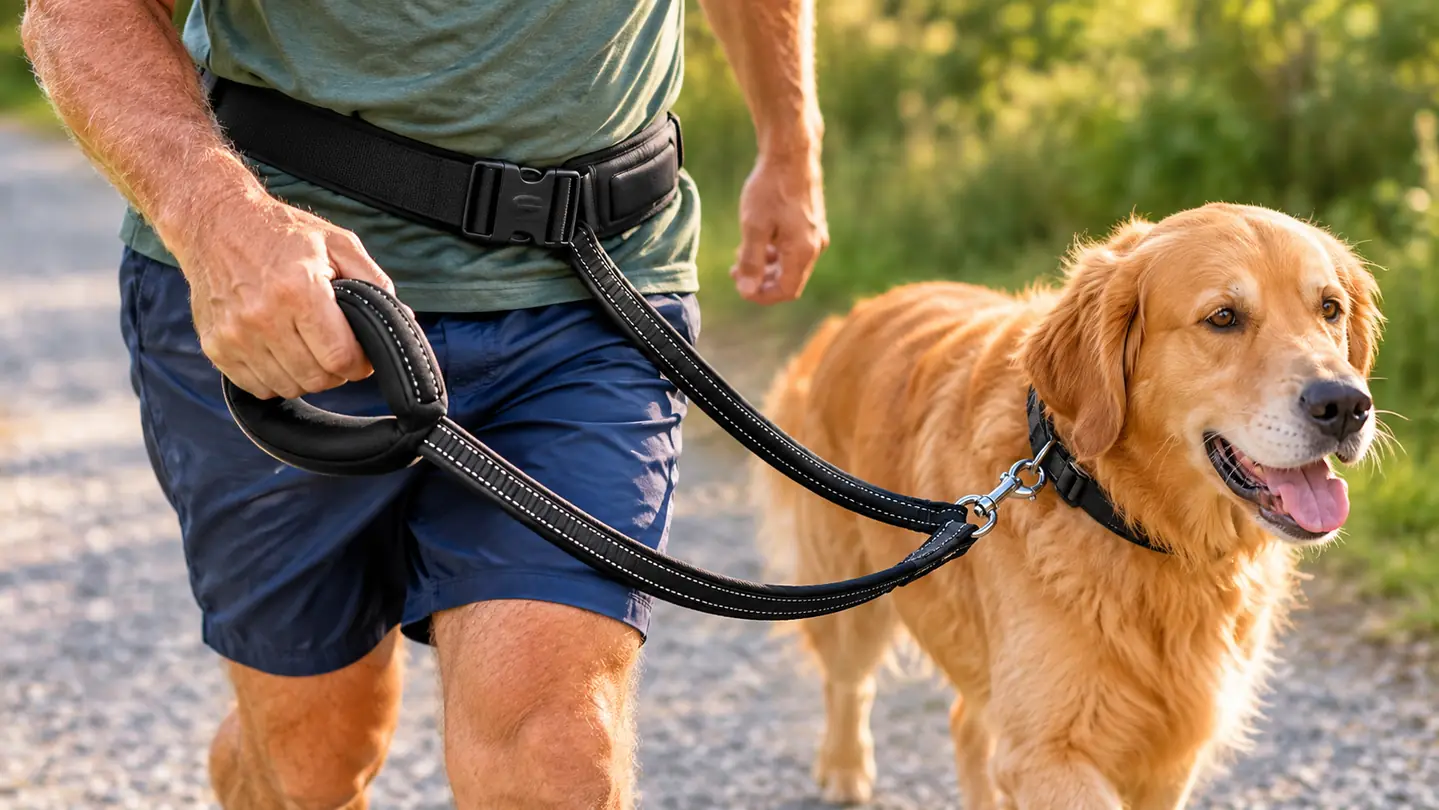
The line runs two shock absorbers, and the difference shows up in the first fifty meters. On a handheld leash a sudden stop is a hard stop, and you feel all of it through your wrist and elbow. With the absorbers, Juno's lunge stretches out over a beat instead of snapping tight. It does not train your dog to stop lunging. What it does is keep one hard jolt from wrecking your stride and your shoulder on a cold morning.
Both hands come back to you
On a handheld leash my left hand is a closed fist for the entire run. No water bottle, no treat, no phone, no gate latch. With the belt doing the holding, both hands are mine again. I can reward Juno for a clean pass on a mountain biker without stopping, and I can work a cattle gate on the trail without wrapping a loop of nylon around my palm first. Small thing. It adds up over six miles.
The load lands on your hips, not your wrist
Your hips are built to carry load. Your wrist is not. The waist belt spreads the pull across the front of your pelvis, where your glutes and core can answer it, which is the whole reason canicross setups look the way they do. It fastens with a buckle, so it goes on over whatever you are wearing and comes off one handed at the trailhead. My lower back feels the difference on climb days. My arms do not.
Two extra handles give you a real emergency brake
There are two extra handles, one at the waist and a second one further down the line. Around blind corners, at road crossings, and any time I need Juno within three feet of me, I take the lower handle and shorten my grip. That is the part a plain handheld leash cannot give you, because you are already holding the only handle there is. I use mine every run at the one road crossing between the trailhead and the singletrack.
The belt fits a tank top or a February jacket
The waist belt adjusts from 27 inches to 48 inches, which covers a July tank top and a February softshell plus a treat pouch. That range matters more than it sounds. A belt that only fits one layer setup either pinches in summer or rides up over a jacket in winter. Mine has stayed where I put it through both, and the adjustment has not slipped once in a full season of twice weekly trail runs.
The zipper pouch ends the pocket shuffle
There is a zipper pouch built into the belt, and it has quietly retired my running vest. Two rolls of bags, a handful of kibble, and my car key go in it. On a handheld leash all of that lives in a pocket or a pack that bounces with every stride. The pouch sits flat against my low back and does not move, even running downhill with Juno pulling. I check that it is zipped before every run now, out of habit.
The two inch clip is the part I check before every run
The clip is two inches of heavy duty hardware, and it is the first thing I inspect, because it is the only place in the system where a failure means a loose dog near a road. A season of mud, grit, and one accidental soak in the Boise River has not loosened it. I rinse it, dry it, and check that the gate still snaps shut with a click I can hear. That check takes four seconds. It is the four seconds I care about most.
The D-ring keeps the clicker at your thumb
There is a D-ring on the leash for hanging a clicker or a small training pouch. For a dog like Juno, who will work all day if I let her, being able to mark and reward a good decision mid-run is the difference between a trained dog and a dog who is simply being managed. My clicker hangs there and I can catch it with my thumb without breaking stride. Nothing fancy about it. It is just in the right place.
It lives in the hatchback at under ten ounces
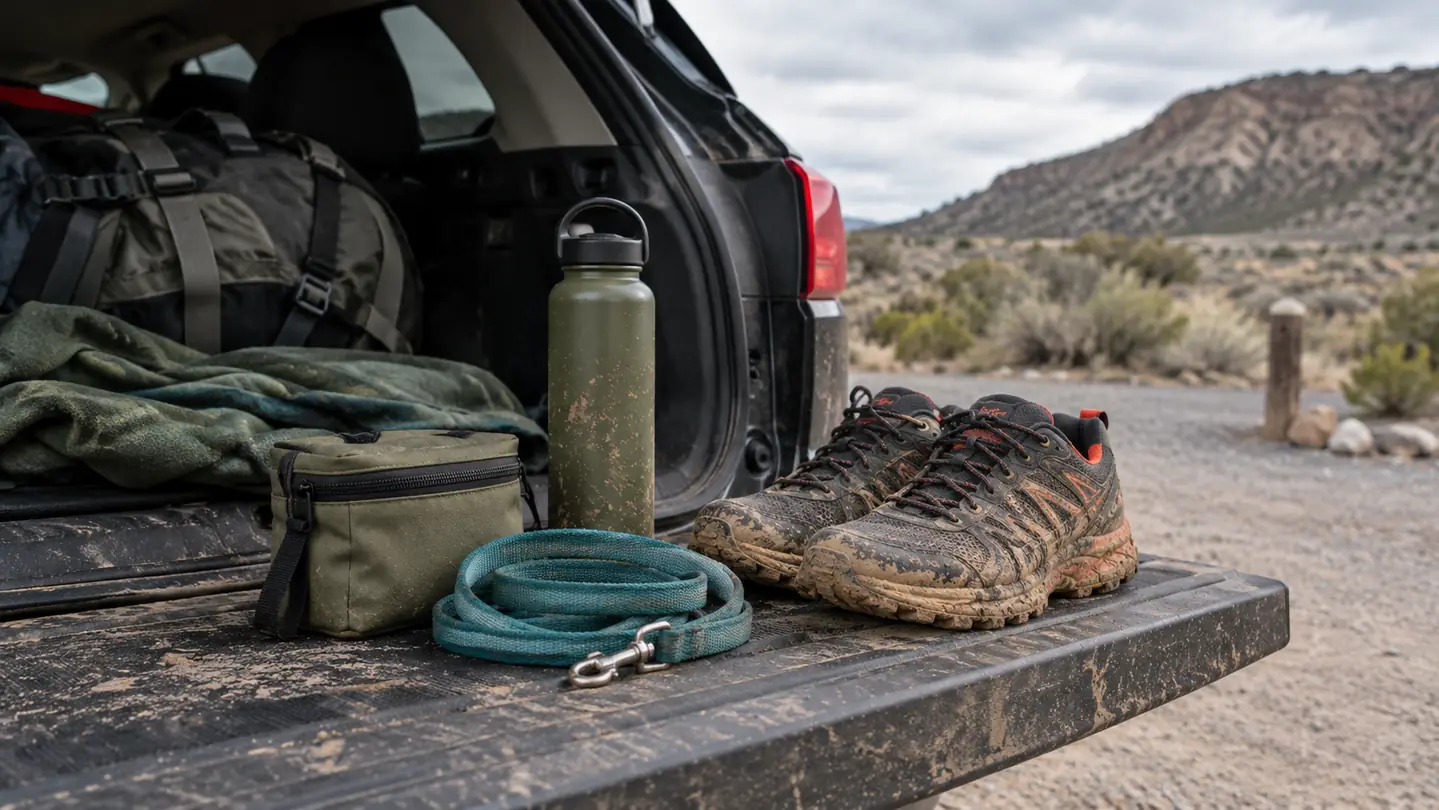
The whole leash is 68 inches long and weighs 9.6 ounces, so it stays in the hatchback door pocket next to a spare slip lead. Rinse it after a muddy run, hang it over the fence, and it is dry by morning. It carries a one year warranty, which I have not needed to use. Gear that lives in your car and still works in March is gear you actually end up using.
What I'd Skip
I would not buy this to fix pulling. A waist leash changes where the force lands, not how much of it there is. If your dog drags you down the block, you still need a front clip harness and some loose leash work before you run together, and no piece of hardware substitutes for that. I would also skip it for a dog well under 25 pounds, since the listed range starts at 25 and this is a lot of leash for a small dog. And the shock absorbers work against you in a tight heel drill on a sidewalk, where you want a direct line and instant feedback. I use a plain six foot lead for that work and keep the belt for running.
One more thing worth saying plainly. A belt leash puts your dog beside or behind you by default, which means you cannot see what Juno is about to eat or step on nearly as easily. If your dog has a paw injury, a cut pad, or is coming back from a strain, put them in front of you on a handheld or a long line until they are sound. Safety over convenience, every time.
Two shock absorbers do not train your dog to stop lunging. They stop one hard jolt from wrecking your shoulder on a cold morning.
If you already run with your dog, you already need this
Nothing here replaces loose leash work or a well fitted harness. It replaces the closed fist you have been running with since the first mile, and it puts the pull on the part of you that can handle it.
Amazon Check the iYoShop Waist Leash on Amazon →