
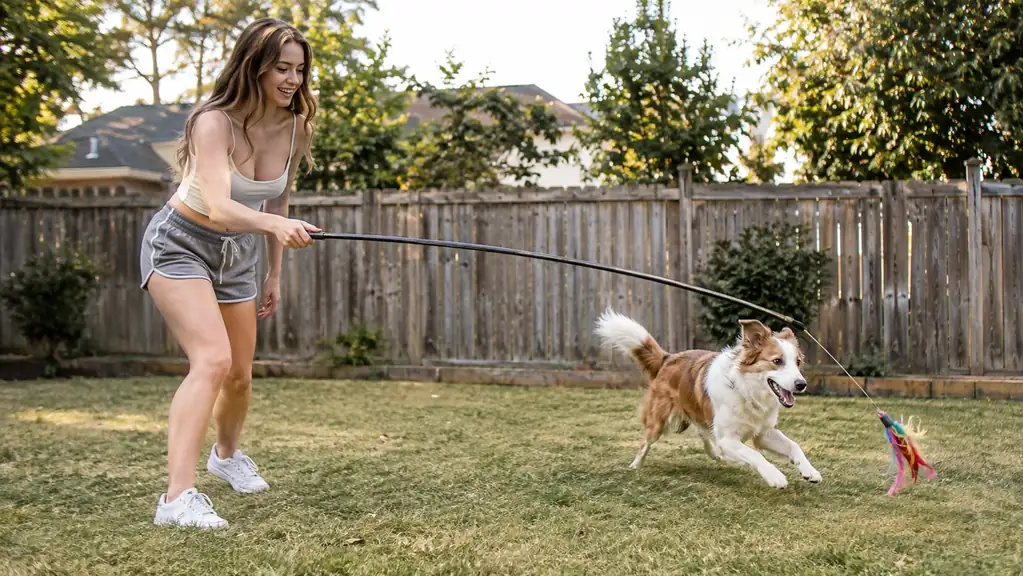
If your dog thinks a tennis ball is the only thing worth living for, you already know the problem with fetch. You throw, the dog sprints, you throw again, and forty minutes later your arm is tired but your dog is still staring at your hand. I live outside Boise, Idaho, with Juno, a four-year-old Border Collie who is about 40 pounds and has a motor that does not quit. I bought the Squishy Face Studio Flirt Pole V2 because I wanted a way to give her a real workout in the small fenced backyard behind my house, not another excuse to drive to a field and throw until dark. After a few months of using both the pole and plain fetch, my honest take is that neither one is the whole answer. The flirt pole is better for controlled drive work, timing, and small spaces. Fetch is better for simple distance cardio when you have open ground and a dog with a reliable recall.
The Squishy Face Studio Flirt Pole V2 is a 36-inch teaser wand that comes with an included lure. The listing puts it at 12.8 ounces, or less than one pound, with a soft, non-slip grip and a polyester build. It is not water resistant. The company says it can provide an effective workout in less than 10 minutes a day by tapping into a dog's natural prey drive, and after using it with Juno I think that is a fair ceiling rather than a target. Ten minutes of focused chasing is a lot for a dog who actually commits to the game. The listing also recommends all breed sizes while separately listing small breed size, which is a little confusing, but the regular 36-inch size has been manageable for me with a 40-pound dog. The short answer is simple: buy the flirt pole if your problem is a dog who needs a structured outlet in a small space. Keep using fetch if your problem is a dog who needs to run long and straight in a safe field. Most high-drive dogs I know need both.
| Squishy Face Studio Flirt Pole V2 | Fetch with a tennis ball | |
|---|---|---|
| Space needed | Fits a small fenced yard; the 36-inch pole lets you steer the chase. | Needs a long field or safe corridor for a useful sprint. |
| Handler effort | You time the lure and reset each rep; active handling. | Throw and wait; easier on a tired person. |
| Session control | You can stop the moment form slips or arousal spikes. | A ball-obsessed dog will ask for one more throw. |
| Sprint distance | Arcs and short bursts, not full-field speed. | A long throw gives a true full-speed run. |
| Turning load | You can keep turns wider and the lure lower. | A rolling ball invites hard stops and sharp cuts. |
| Impulse control | The game waits for your cue, so sits and stays fit naturally. | Arousal can override manners once the ball is moving. |
| Portability | 36 inches long, so it rides in a hatchback but not a pocket. | A ball fits in a pocket or treat pouch. |
| Wet weather | Listing says not water resistant; store it dry. | A ball wipes off and keeps working in drizzle. |
| Mental work | Taps prey drive and gives the dog a clear job. | Simple chase and retrieve, less handler timing. |
| Cleanup | Pole and lure need to be stored out of reach. | One ball, quick rinse, done. |
Where Squishy Face Studio Flirt Pole Wins
The first place the Squishy Face Studio pole wins is space. A 36-inch pole and a lure do not need a football field. I can stand in the middle of my small backyard, move the lure in low arcs, and let Juno stalk, chase, and pounce without leaving the fence. Fetch needs distance to be worth much. If I throw a ball 20 feet in my yard, Juno makes a hard stop, spins, and brings it back before she has opened up her stride. That is not real cardio. It is a lot of turning. With the pole I can keep the chase closer to me and still get her heart rate up because the game is about pursuit, not pure distance.
The second win is control. The flirt pole lets me decide when the game starts, how high the lure moves, and when it ends. I can ask Juno for a sit before I move the lure. I can stop a rep when her turns get sloppy. I can put the pole away before she is overheated or frustrated. Fetch gives the dog the same burst of arousal, but it is harder to insert a pause. A ball-obsessed dog will keep offering a retrieve, and it is easy to throw one more time because the dog is still willing. That is how you end up with a dog who is physically tired but mentally wired. The pole makes the off switch part of the game.
Where Fetch Wins
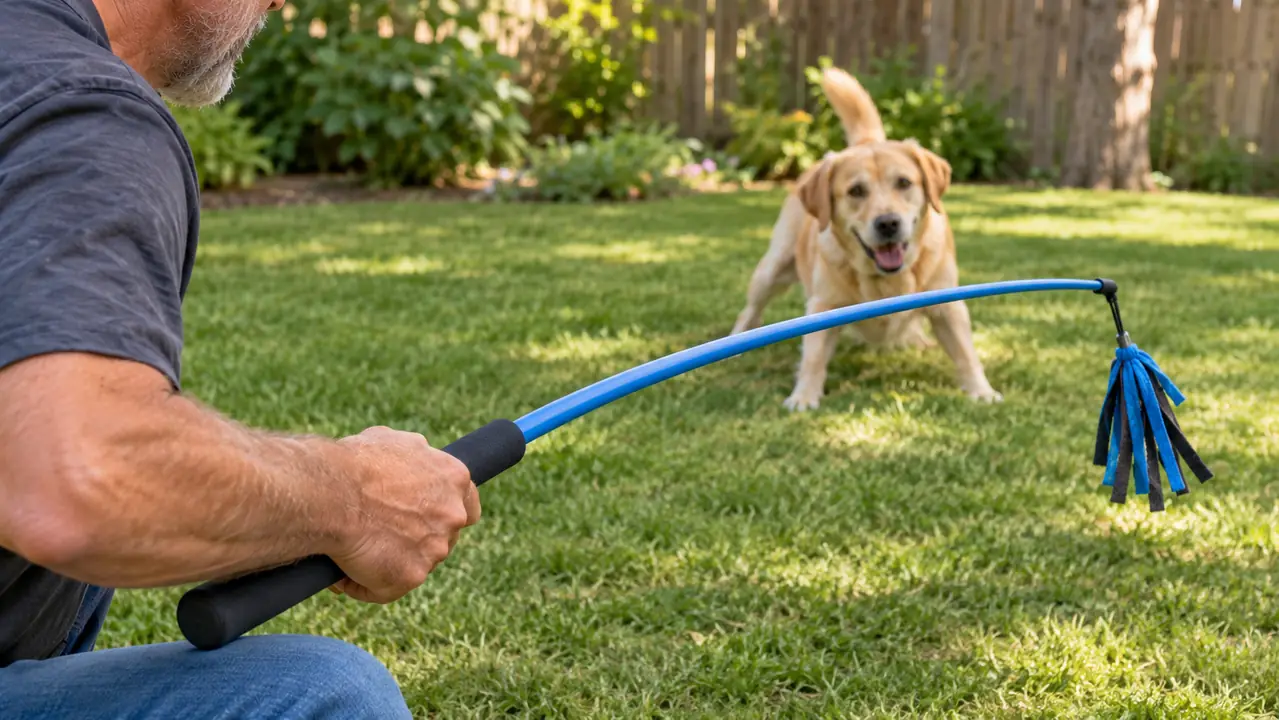
Fetch wins on simplicity and distance. There is no pole to carry, no lure to swing, and no timing to learn. I can put a ball in my pocket, walk to the foothills, and give Juno a straight-line sprint that the flirt pole cannot match. A long throw sends her across open ground at full speed, and that is a different kind of fitness than chasing a lure in a circle. When I am working on her conditioning for canicross, I want her driving forward in a line, not cutting tight arcs in the yard. Fetch also gives me a break. I can stand still, breathe, and let her do the work. After a long day on my feet at the clinic, that matters.
Fetch also travels better. A tennis ball fits in a jacket pocket or a treat pouch. The 36-inch pole goes in my hatchback, but it does not go on a hike unless I plan to carry it. I have done it, and it is fine, but it is not the same as tossing a ball in the car and forgetting about gear. Wet weather is another point for fetch. The Squishy Face Studio listing says the pole is not water resistant, so I do not leave it out in the rain or drag it through wet grass and then store it damp. A ball gets wiped off and keeps going. If your only goal is to wear out a dog with minimal equipment and minimal instruction, fetch is still the easier answer.
A Ten-Minute Yard Session Beats Another Forty Throws
The Squishy Face Studio Flirt Pole V2 is 36 inches, 12.8 ounces, and comes with its lure. It gives you a clear start and stop in a small space, which is exactly what a high-drive dog needs on a busy evening.
Amazon Check Today's Price on Amazon →How I Use the Flirt Pole With Juno
I start with a short warm-up, not a full sprint. Juno gets a few minutes of sniffing and walking before I bring out the pole, because I want her tendons warm before she starts cutting. I use the included lure and keep the first passes low and slow, more of a drag than a whip. The point is to let her stalk. If I start swinging fast right away, she goes from zero to frantic in two seconds and the session becomes chaos. I also check the ground. My backyard is mostly grass, but there are bare patches near the gate. I keep the game on the grass and away from the patio edge. A dog chasing a lure does not watch the ground.
A session for Juno is usually eight to ten minutes, and I stop before she looks like she wants to drop. I ask for a sit or a down between reps, reward with a piece of food, then start again. That pause is the whole reason I like the tool. It teaches her that the game has rules. When we are done, I put the pole away, out of reach, and give her a chew or a scatter feed in the grass. I do not let her grab the lure and shake it. The lure is the thing she chases, not a tug toy, and if she gets teeth on it I end the session. The 12.8-ounce weight and soft grip make the pole easy to handle with one hand, which matters when I am also holding a treat pouch or a leash.
Pacing, Paws, and the Day After
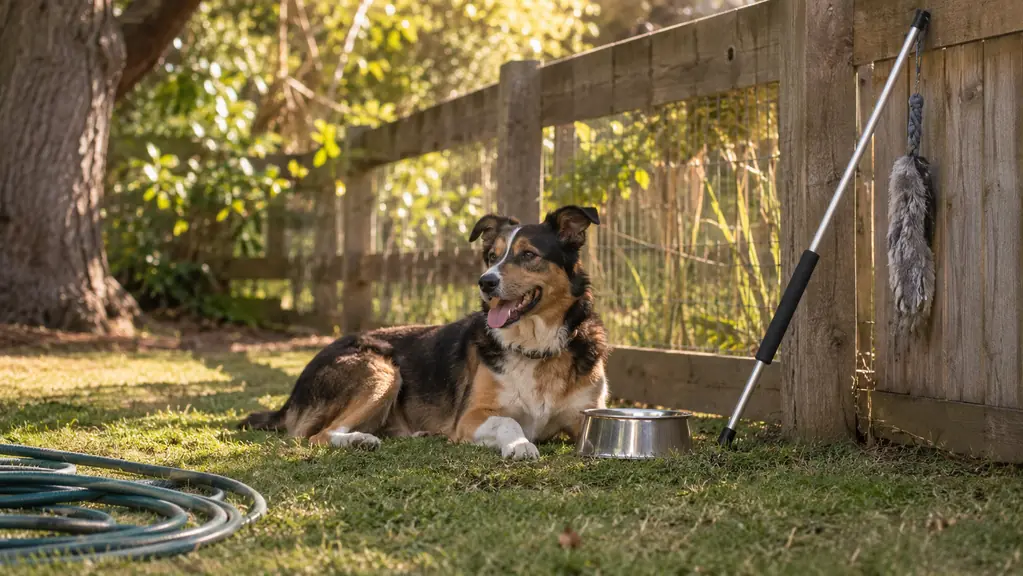
The biggest mistake I see with any high-drive dog is treating every session as a fitness test. Fetch and flirt pole both ask for sudden accelerations, hard turns, and repeated stops. That is a lot of load on paws, wrists, and shoulders. I am a physical therapy assistant, not a veterinarian, so I do not diagnose anything, but I do pay attention to how Juno moves the next day. If she is stiff or short-strided, we take an easier day. I check her pads after sessions on dry grass, especially in late summer when the ground is hard. I do not run either game on hot pavement. I do not play either game right after a meal. And I cap fetch before Juno starts lying down with the ball and refusing to give it up.
Heat is the other issue. Boise gets hot, and a dog who will not quit will not self-regulate. I choose early morning or shade, bring water, and stop before the heavy panting turns into a dull stare. With the flirt pole I can end the game in seconds because I control the lure. With fetch I have to be the one who says no, and Juno does not always agree. That is not a knock on fetch. It is a reminder that the tool does not make the decision. The handler does. The Squishy Face Studio pole makes the stop easier because the game disappears when I lower the pole and put it away.
The flirt pole is not a replacement for a long run. It is a way to give a driven dog a job when the yard is small and the clock is short.
What About a Dog Who Gets Over-Aroused?
Some dogs get too high with a flirt pole. They scream, spin, or grab at the lure before it moves. If that is your dog, the pole is still useful, but the first sessions are about manners, not mileage. I would start with the pole behind my back and ask for a simple sit. I reward the sit, then move the lure one time. If the dog breaks, the game stops. That is not a punishment. It is just the rule. The same rule applies to fetch, but it is harder to enforce once the ball is in the air. The pole gives you a chance to teach the start and the stop because the lure is on your timeline.
I also do not use the flirt pole with a dog who is recovering from an injury without a vet's guidance. The turns are real. The chasing is real. A young puppy should not be doing repeated hard cuts, and a senior dog may need something flatter and slower. Juno is four and sound, and I still keep sessions short. If you have a dog who is overweight, out of shape, or coming back from a layoff, build up gradually. The same goes for fetch. A dog who has not sprinted in months should not be asked to chase a ball for thirty minutes. The tool is not the problem. The sudden increase is.
Who Should Buy Which
Buy the Squishy Face Studio Flirt Pole V2 if you have a high-drive dog, a small yard, and a schedule that leaves you with ten minutes instead of an hour. It is also the better choice if your dog needs help learning impulse control around moving things. The pole gives you a clear start and stop, and the 36-inch length keeps your hand away from the action. It is not a chew toy, it is not water resistant, and it will not replace a long hike. But for a quick, structured outlet on a Tuesday night, it earns its space in my gear bin.
Keep your fetch routine if you have safe open ground, a dog with a solid recall, and a goal of straight-line conditioning. Fetch is also the easier choice for a shared activity with a family member or a friend who does not want to learn a new handling skill. If you are choosing only one, choose based on your space and your dog's off switch. A dog who gets frantic around a ball may do better with the pole first. A dog who needs miles may do better with fetch. Most people I know end up using both, just not on the same day.
Give Your Dog a Job That Fits in the Backyard
If your dog needs a structured outlet and you do not have a field nearby, start with the Squishy Face Studio Flirt Pole V2 and keep the first sessions short. Ten focused minutes can do more than a tired arm and a dog who never stops asking for the ball.
Amazon Check Today's Price on Amazon →