
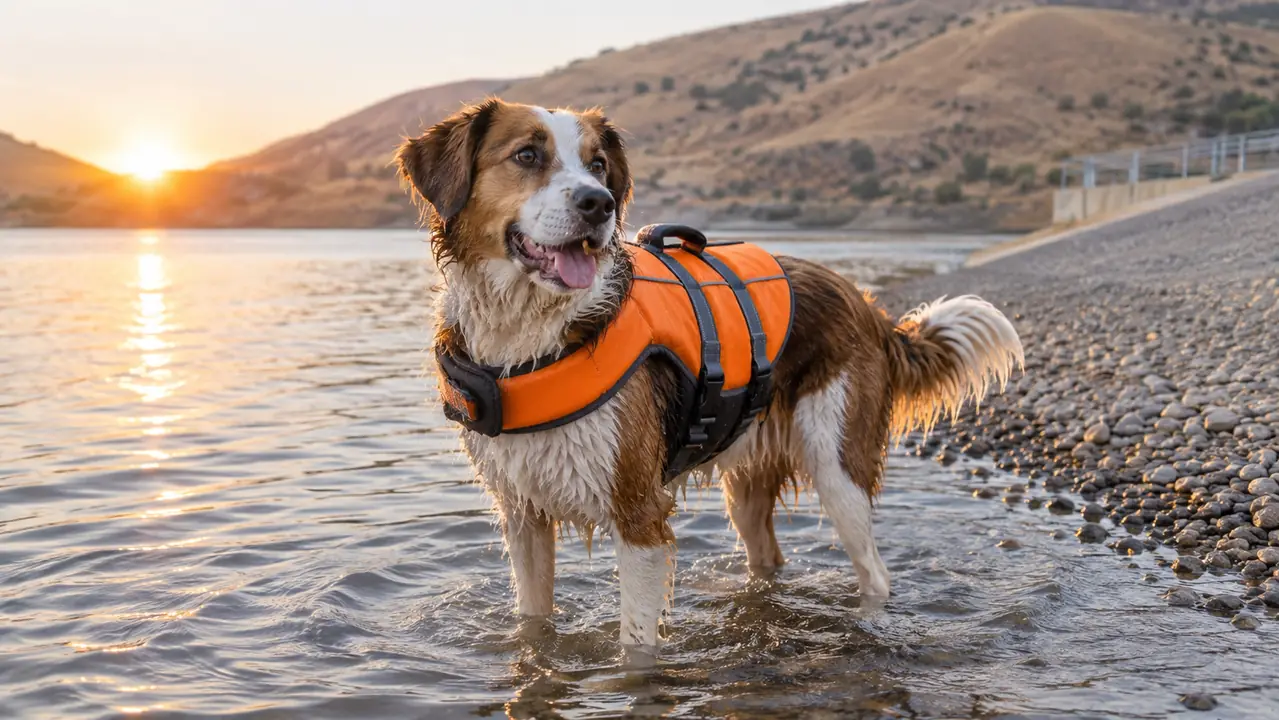
Juno is a 4-year-old Border Collie who will chase a bumper into open water until her legs quit, and that is exactly why she wears a life vest and exactly why I stopped trusting cheerful product photos. She has worn the Outward Hound Granby Splash through two swim seasons now: reservoir mornings outside Boise, a handful of river days, and one cold April session at the ramp that I would not repeat. This is the honest version of that experience, including the parts the listing page leaves out.
Here is the short version. The Outward Hound Granby Splash is a maximum-buoyancy vest for medium dogs, sized by chest girth instead of weight, and it does the job that matters: it keeps a tired dog's head above the waterline without turning her into a floating brick. What nobody tells you is that the fit takes more fiddling than the photos suggest, that the sizing hinges on a measurement most owners get wrong the first time, and that the back of the vest is not a place to grab when your dog is thirty feet out and pretending not to hear you. Those three things decide whether this vest works for you.
I went looking for a proper vest after a day at a local reservoir where Juno swam further out than I was comfortable with and then got quiet in the water. Nothing dramatic happened. She came back in. But I drove home thinking about how little margin there was between a strong swimmer and a tired one, and how fast that margin closes. A high-drive herding dog does not pace herself, so pacing has to come from me and from gear that buys a little room.
The Quick Verdict
A genuinely good open-water vest for a medium dog inside the 21 to 27 inch girth range, held back by unforgiving sizing at the top of that range and by having no listed lift point on the back.
Amazon Check Today's Price →Measure the Chest Before Anything Else. The Medium Stops at 27 Inches.
That range is the whole decision. Measure snug behind the front legs, the way you would measure for a harness, and check the size chart against today's price before you commit.
Amazon Check Today's Price on Amazon →What the Listing Actually Tells You
The listing I am working from is plain about three things: a medium size built for a chest girth of 21 to 27 inches, adjustable straps with quick-release buckles, and a bright shell with reflective accents for spotting a dog in low light or in broken water. It describes the vest as maximum buoyancy for medium dogs of all swimming skill levels, built to support without restricting movement.
That last phrase is the whole design problem in a dog life vest. Too little foam and a tired dog starts swimming nose-up, chin high, hind end sinking, and then she panics. Too much structure and she swims like she is wearing a suitcase. Support without restriction is the thing you are actually buying, and it is the thing I spent two seasons testing.
What the listing does not give you: a grab handle anywhere in the specs, a chest panel measurement beyond the girth range, or any description of how the vest behaves once the shell is soaked through. Outward Hound is not hiding anything sinister there, it is just that a short spec sheet cannot tell you how a vest sits on a narrow dog in chop. I will fill those gaps from use rather than guesswork, and where I cannot fill them I will say so plainly instead of inventing a feature for you.
How I Tested It
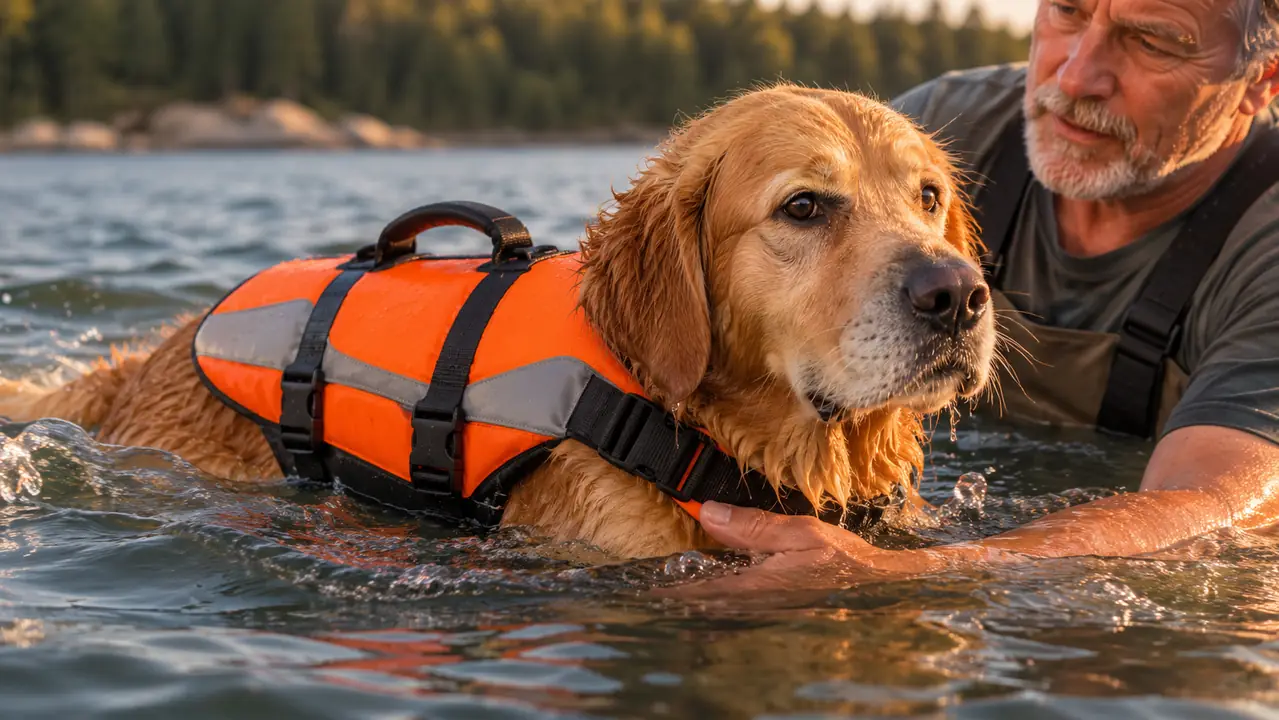
Juno measures 26 inches around the chest, snug, just behind her front legs, and she runs about 40 pounds. That puts her near the top of the medium range, which is the most useful place for a reviewer to sit, because it shows you exactly where the vest runs out of adjustment instead of hiding the problem on a dog in the middle of the chart.
Our routine is unglamorous. I load her into the hatchback, drive to a reservoir with a gravel ramp, and let her swim short repeats with rest on the bank between them. She is a high-drive dog, so the vest's job is not to teach her to swim. Its job is to buy me a margin when she overestimates herself. I have also used it at the agility club field for water confidence work, and on one river float where the current did more of the work than she did.
The first thing I do with any vest is a fit check on dry land, then a second fit check after five minutes in the water. Foam compresses. Straps that felt snug on the grass will be loose once the shell is wet, and a loose vest on a swimming dog is worse than no vest at all, because it rides up toward the neck and the dog spends the swim fighting it instead of swimming.
I check three points every time: the front strap across the chest, the strap behind the ribs, and the clearance at the shoulder. If the shoulder opening is grabbing, the vest is too far forward. If I can slide a whole hand under the rib strap, it is too loose. That takes about ninety seconds and it is the difference between a vest that works and one you quietly stop using.
Buoyancy: What It Does and What It Does Not Do
On a dog who can already swim, the Granby Splash changes posture more than speed. Her hind end rides higher, her back stays closer to level, and she stops doing the steep nose-up paddle that tires out a dog's neck. Over a long session that is a real difference, and it is the reason I keep putting it on her even though she is a strong swimmer.
What it does not do is turn a non-swimmer into a swimmer. I have watched a dog in a vest do the vertical panic paddle in chest-deep water with her chin up. The foam kept her face clear. It did not teach her anything. Buoyancy is not skill, and a vest is a safety net for a session you are already supervising, not a replacement for shallow water, a long line and a pocket full of treats.
It also does not float the way it floats in the photos once the shell is wet. A soaked vest is noticeably heavier on land, and on the bank Juno will stand there dripping with a resigned expression while the water drains out of the foam. That is not a flaw, it is just what foam does, and nobody photographs it.
At 26 inches of chest girth, near the ceiling of the medium range, the straps still had about two inches to give. That margin is the entire reason the sizing works for Juno.
Fit: Where the Medium Lands, and Where It Slips
Sizing by chest girth is the right call, and it is also where most people get this wrong. Weight tells you almost nothing useful. A lean 40-pound herding dog and a thick 40-pound anything else are not the same shape. Measure all the way around behind the front legs, snug but not tight, and measure twice, because a wriggling dog costs you an inch every time.
At 26 inches Juno sits close to the top of the 21 to 27 inch medium range and I still have a couple of inches of strap left to give. That is about the margin I want. If your dog measures 26 and a half or 27, you are on the edge and I would take the measurement again before ordering. If your dog measures over 27, the medium is the wrong vest and no amount of strap adjustment will fix it.
The adjustability is the part I like most. Adjustable straps with quick-release buckles means I can get the vest onto a dog who is vibrating with excitement at the ramp, and get it off just as fast when she is wet, shivering, and ready for a towel. Nothing about the closure requires two hands and a good mood, which matters more than it sounds when your fingers are cold.
Where it slips for us is the chest. Juno is narrow in front, so the vest rotates slightly to one side after a few hard turns in the water. Tightening the front strap one notch past where it looks right on dry land mostly solves it. Mostly. A broader dog would not have this problem, and a narrower dog would have it worse, which is worth knowing before you buy.
The Handle Question
This is the part I want to be careful about. The specs I am working from list adjustable straps, quick-release buckles, and a bright shell with reflective accents. They do not list a grab handle anywhere. So I do not treat the back of this vest as a lifting point, and if a handle is the main reason you are shopping, look closely at the current Outward Hound listing photos before you buy rather than taking my word or anyone else's.
What I do instead is get in the water. One hand under Juno's chest, one under her hips, and lift with my legs, which is the same way I move dogs at work. It is slower than reaching down and hoisting. It also does not load a single seam or her spine, and on a dog who is already tired, the slower version is the one I want every time.
If you are coming off a vest with a big padded handle and you use it constantly, budget a couple of outings to build the new habit. The first time Juno went under unexpectedly at the ramp I reached for the back out of reflex and caught myself. Get your lifting plan sorted before the dog is tired, not after.
Two Seasons Later: What Wore and What Held
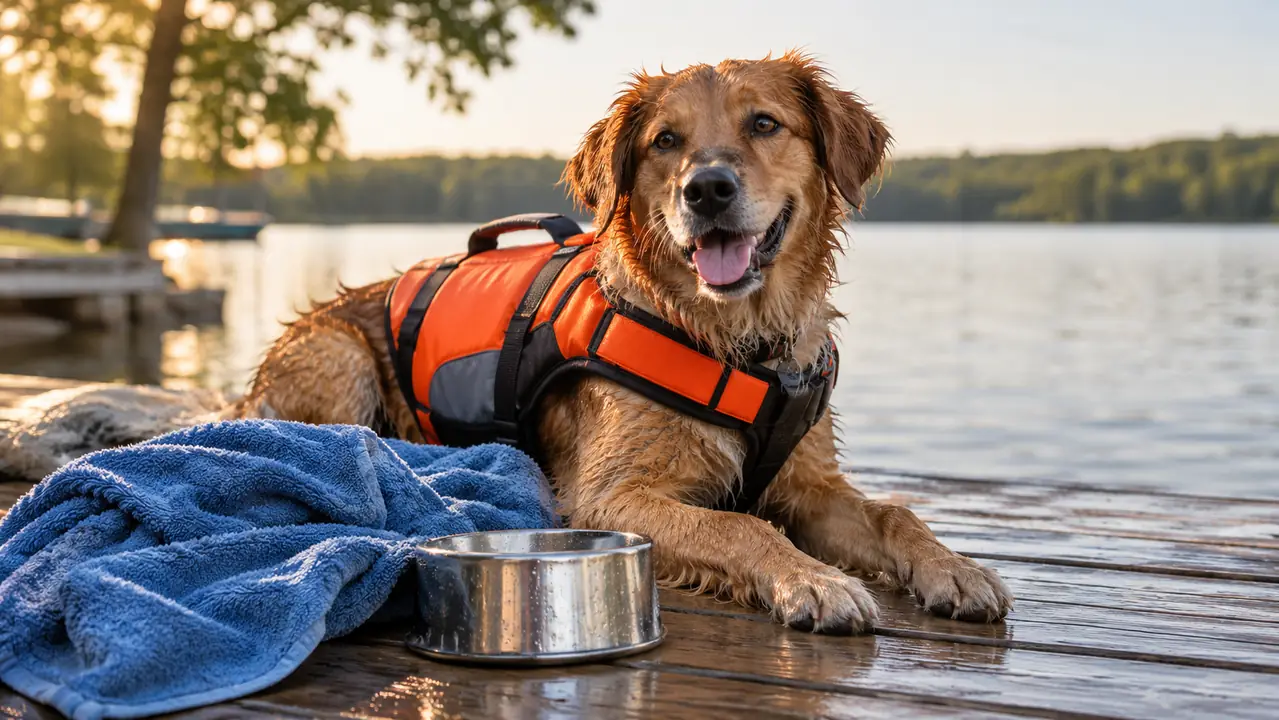
Two seasons in, the vest looks used but not finished. The shell has faded a little along the top where the sun hits it. The seams at the strap anchors are intact, which is the thing I actually watch for, because a strap anchor is where a cheap vest fails first. The foam has not gone soft or crumbled, and it has been soaked and dried more times than I can count.
The buckles are the part I expected to replace and have not. Quick-release buckles take a lot of grit at a gravel ramp and they still click shut with the same authority they did on day one. The straps have not frayed and the adjustment has not crept. Watching hardware fight the same conditions for two years is the test that tells you the most about a piece of gear, and this one has passed it.
If something gives out first, my guess is the shell fabric before any of the hardware, and that is the right order for something to fail in. A worn shell still floats. A failed buckle does not, and none of the Outward Hound buckles has given me a single reason to doubt them yet.
What I Liked
- Sizing runs on chest girth, 21 to 27 inches for the medium, which is the measurement that actually predicts fit
- Adjustable straps with quick-release buckles go on and come off fast at the ramp with cold hands
- Bright shell with reflective accents makes a dog easier to track in low light and in chop
- Keeps a tired dog's hind end higher and her back closer to level on longer swims
- Simple construction with nothing electronic to break, and it rinses clean in under a minute
Where It Falls Short
- Narrow-chested dogs can feel the vest rotate on hard turns until the front strap is tightened past where it looks right
- The specs do not list a lift handle, so it is not a device for hauling a dog out of the water
- Wet foam is heavy on land and takes a while to drain on the bank
- No help at all for a dog who has not yet learned to swim
- The medium is unforgiving if your dog measures right at 27 inches
What Nobody Tells You
The bright shell and reflective accents do more for you than for the dog. In open water at dusk, they are how a boat sees your dog before it sees you. That is a real benefit and it is also a limited one. Reflective trim only works when light hits it. In flat grey light with nothing shining your way, high visibility becomes ordinary visibility, and the honest advice is still to keep a bright dog close with a long line on.
Rinse it. Every time. Lake water, river silt and chlorine all live in foam, and a vest left damp in the back of a hatchback will smell like a bait bucket by the second week. A rinse, a hang on the fence, and a fully dry vest before it goes back in the car is the entire maintenance routine, and skipping it is the fastest way to make yourself stop using the thing.
A vest is an extra layer on a dog in July. I do not leave it on between swims. Juno wears it in the water and it comes off on the bank, because heat is a bigger risk to a high-drive dog in summer than most owners realise, and a black dog in a padded vest on a sunny dock is a dog who is not cooling. Water, shade, a wet towel on the chest and belly, and short repeats beat one long heroic session.
The sizing is unforgiving at the top. This is the most common way people end up unhappy with a dog life vest: the dog measures at the ceiling of a size, the owner rounds down out of hope, and the vest rides forward toward the neck or the dog backs out of it at the ramp. The Granby Splash is not unusually strict about this. It is just honest about it, and 27 inches really does mean 27 inches.
One more thing about water temperature. The foam holds cold against a dog's chest for a while after she comes out, and a shivering dog on a windy bank wants a towel more than she wants a vest. Take it off, dry her chest and belly and armpits, and let her walk it off in the sun before the next repeat. That is the routine that keeps a swim day from turning into a chill day.
Who This Is For
This vest is for the owner of a medium dog who measures inside 21 to 27 inches at the chest and who actually takes that dog into water. Open water, a dock, a boat, a river float, a lake with a long swim back to the ramp. It suits a confident swimmer who needs a margin when she gets tired, and it suits an owner who wants the vest on and off quickly with cold hands.
It also suits anyone who wants to spot their dog in low light, since the bright shell and reflective accents are the most useful thing on the vest after the foam itself. If you swim at dawn, at dusk, or anywhere near boat traffic, that matters more than any other small detail on the label.
Who Should Skip It
Skip it if your dog measures outside the medium range, and skip it if the main thing you want is a handle to lift your dog out of the water. Skip it if your dog has never swum and you were hoping the vest would do the teaching, because it will keep a panicking dog's head up and nothing more.
And skip it if you are swimming in genuinely cold water and treating a vest as warmth. A vest is not a drying plan. A wet dog in cold water needs you on the bank with a towel and a plan for getting her back to the car, not more gear strapped to her back. If your dog measures over 27 inches, be honest with yourself and go up a size in whatever vest you choose rather than forcing this one.
Measure Once, Then Buy the Size the Chart Actually Says.
The medium is 21 to 27 inches of chest girth, and nothing on the vest will fix a number outside that. If Juno's number is your number, this one has earned its spot in the hatchback.
Amazon Check Today's Price on Amazon →